The cone is filled, but the sundae beside it still needs sauce, toppings and a spoon. The next customer is waiting while the only server crosses the counter for empty cups. A larger commercial soft-serve machine may leave that queue exactly where it was.
Before comparing machines, separate three decisions: can the proposed configuration make your menu, can the person finish the orders, and can the exact machine sustain the required sequence? The worked example below resolves the second question without pretending to answer the third.
Define the order the customer actually buys
“Soft serve” is not a complete service brief. A plain cone, a two-flavour twist and a sundae with several finishing steps ask different things of the station. Write the finished orders first, including the flavours and portions you intend to sell. Then show where the empty serviceware, toppings, utensils and completed desserts go.
Keep equipment functions separate too. Atlantic’s soft-serve and ice-cream equipment collection includes different jobs, including dispensing and batch-production equipment. A batch freezer or storage cabinet is not automatically a substitute for a counter dispenser.
For example: “During our ten-minute dessert rush, one person must take the waiting orders through dispensing, finishing and handover, using the menu shown below.” Replace that fictional window and order mix with your own observations before taking a brief to a supplier.
A ten-minute rush can fail before machine capacity is considered
Imagine 18 desserts are required within a ten-minute window. For this illustration, one operator has 600 seconds available and does all the active work. The assumed times include that person’s dispensing and finishing tasks; they are not measured machine speeds or recommendations for any product.
| Finished order | Orders | Assumed active work each | Active work total |
|---|---|---|---|
| Plain cone | 8 | 20 seconds | 160 seconds |
| Two-flavour twist | 4 | 25 seconds | 100 seconds |
| Finished sundae | 6 | 60 seconds: 20 dispensing + 40 finishing | 360 seconds |
| Total active work | 620 seconds | ||
The arithmetic is 8 × 20 + 4 × 25 + 6 × 60 = 620 seconds. One person cannot fit 620 seconds of active work into a 600-second window. This plan already runs 20 seconds over before counting any extra payment task, interruption or equipment wait that the assumptions omit.
That is a labour screen, not a throughput model. It says the current plan fails even under the simplified assumptions. It does not tell you which machine will keep product ready, how individual orders will queue, or how a refill affects service.
Change the finishing job before buying more dispensing capacity
In this fictional counter, the sundae’s 40-second finishing allowance includes walking for an empty cup and spoon, returning to the topping point and finding a clear handover space. The proposed change moves only empty serviceware within reach and gives finished orders a defined landing point. It does not change the machine or pre-portion food.
Suppose a trial of that revised arrangement reduces the assumed sundae finishing work from 40 to 25 seconds. Keep the other assumptions unchanged:
| Order group | Calculation | Active work |
|---|---|---|
| Plain cones | 8 × 20 seconds | 160 seconds |
| Twists | 4 × 25 seconds | 100 seconds |
| Sundaes | 6 × (20 + 25) seconds | 270 seconds |
| Revised total | 530 seconds | |
| Unallocated part of the 600-second window | 70 seconds | |
The layout change removes an assumed 90 seconds of work. Now the labour sum fits, with 70 seconds unallocated. That is permission to test the proposal, not a promise that 18 desserts will be served on time. An equipment pause, a poorly timed arrival burst or another task could use up that margin.
If the finishing work remains the constraint, test a dedicated finishing helper or a simpler service offer. If the operator is instead waiting for the machine to be ready, record that separately. Those observations lead to different equipment and staffing decisions.
Choose a configuration that can make the menu
A time calculation cannot rescue an unsuitable flavour arrangement. In Atlantic’s catalogue, the Taylor C707 is a single-flavour example; the C723 is a two-flavour model with a twist option. Taylor’s C707 manufacturer page and C723 specification confirm that distinction.
| Menu requirement | What the example tells you | What still needs proof |
|---|---|---|
| One flavour, served plain or with toppings | A single-flavour configuration can be considered against that menu. | Mix suitability, the complete order sequence, permitted operation and site fit. |
| Two separate flavours plus a twist | The C723 manufacturer specification describes this arrangement. The single-flavour C707 does not provide the complete proposed menu by itself. | The selected configuration’s ability to sustain your portions and sequence under the intended conditions. |
| A queue held up at the topping point | Another flavour option does not remove the finishing tasks identified in the labour screen. | A trial of the whole counter, including the people and handover route. |
Use those models as configuration examples, not as a universal shortlist. The manufacturer’s C723 document includes different electrical and cooling configurations and directs buyers to the exact unit’s data label. Confirm the Australian model, options, connections and installation scope on the quotation rather than copying a global specification into the site brief.
Run a demonstration that can reject the proposal
Take the menu, intended mix and portion definition to the supplier. Ask for the proposed configuration to be demonstrated against a representative order sequence, with the manufacturer’s permitted operating conditions identified. Record the finished orders and the waits, not just the time the draw handle is open.
- Begin with the starting state. Record the mix, machine preparation and available product at the start, using the model’s documented procedure.
- Repeat the whole order. Include the actual cup or cone, finishing steps and handover. Keep operator work and equipment waits in separate columns.
- Include the awkward part. Test the flavour mix, consecutive orders and replenishment task that matter to your venue. Agree the permitted process with the supplier first.
- Record the outcome that changes the purchase. Did an order wait for dispensing, for the person finishing it, or for clear landing space? Do not call all three “machine capacity”.
Cleaning belongs in the operating plan as well as the quotation. Obtain the exact model’s preparation, cleaning, dismantling and any heat-treatment instructions. Do not turn a feature name into a generic cleaning interval. Identify who performs the work, the access it needs and when the machine is available for service.
Take an answerable brief into the quotation
The useful enquiry is not “Which machine makes the most cones?” It is a description of the service the proposed system must support. The fictional example becomes this short brief:
| Decision field | Example entry | Supplier or operator confirmation |
|---|---|---|
| Menu | Plain cones, two-flavour twists and finished sundaes. | Which exact mix and configuration support all three? |
| Peak requirement | 18 orders within ten minutes; illustrative mix: 8 cones, 4 twists, 6 sundaes. | Test the real arrival sequence and portion definition. |
| People and counter | One operator; empty serviceware within reach; a separate finished-order landing point. | Observe actual active work and any blocked steps. |
| Current planning result | Baseline 620 seconds; revised assumption 530 seconds. Equipment waits are not established. | Demonstrate whether the revised station and selected model complete the sequence. |
| Installed package | Exact model and configuration, support, connections and access to be specified. | Itemise the machine, included accessories, installation responsibilities, service and applicable warranty. |
| Daily operating plan | Named person and time allocation for the documented preparation, replenishment and cleaning tasks. | Confirm against the model’s current instructions and venue procedures. |
Browse Atlantic’s commercial soft-serve equipment with that service brief in hand. Shortlist by the finished dessert, then compare the exact machine and counter arrangement. A successful choice makes the whole order possible, not merely the first swirl.
Sources and example boundaries
Atlantic’s catalogue and the manufacturer sources were checked on 23 October 2026. The Taylor C707 page supports the single-flavour example. The Taylor C723 specification, revision 01/24 supports the two-flavour/twist distinction and the need to confirm the exact installed configuration. Current Atlantic listings identify both models in the relevant collection.
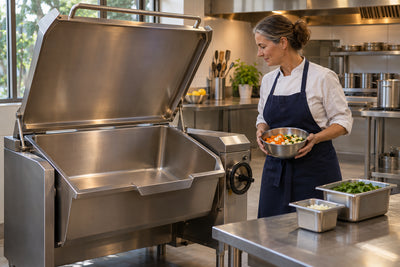
The main image is an AI-generated concept illustration, not a specific model or an approved counter layout. All order counts, task times and counter changes in the worked example are fictional planning assumptions. They are not a customer case study, measured production result or manufacturer output rating. The calculations screen active labour only; mix compatibility, machine performance, food procedures and installed suitability require their own documented checks.
About this guide
Prepared by Atlantic Equipment
This guide separates menu configuration, operator workload and machine performance so an equipment enquiry can describe the whole dessert service. Its completed example is intended to help operators prepare a useful demonstration brief. It does not replace a specific model’s instructions or establish a universal service rate.