


Blast Chillers
Compare commercial blast chillers and blast chiller freezers for batch preparation in catering, restaurant and production kitchens. The range includes tray-loading and roll-in models, with capacity and trolley compatibility shown on individual product pages.
Choose by the weight of food per batch as well as tray count. Check whether the quoted capacity is for chilling or freezing, which pan sizes fit, and the test conditions behind the manufacturer’s cycle rating. A chiller-only model and a combined chiller/freezer serve different workflows.
Before ordering, confirm access dimensions, door clearance, electrical supply and the model’s installation requirements. Compare the listed specifications against your busiest batch, rather than relying on cabinet size alone.
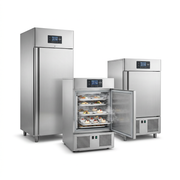
-
 Williams 90Kg Roll In Blast Chiller/Freezer Combi Trolley Compatible
$52,521.00From:$42,016.80 Rent $533.28 + GST/week
Couldn't load pickup availability
-
 Williams 90Kg Roll In Blast Chiller Combi Trolley Compatible
$48,756.00From:$39,004.80 Rent $495.05 + GST/week
Couldn't load pickup availability
-
 Williams 50Kg/13 Tray Blast Chiller Freezer
$26,331.00From:$21,064.80 Rent $267.35 + GST/week
Couldn't load pickup availability
-
 Williams 40Kg/10 Tray Blast Chiller Freezer
$23,161.00From:$18,528.80 Rent $235.16 + GST/week
Couldn't load pickup availability
-
 Williams 320Kg Roll In Blast Chiller/Freezer Combi Trolley Compatible
$96,151.00From:$76,920.80 Rent $976.29 + GST/week
Couldn't load pickup availability
-
 Williams 320Kg Roll In Blast Chiller Combi Trolley Compatible
$91,915.00From:$73,532.00 Rent $933.29 + GST/week
Couldn't load pickup availability
-
 Williams 30Kg/10 Tray Blast Chiller Freezer
$22,552.00From:$18,041.60 Rent $228.98 + GST/week
Couldn't load pickup availability
-
 Williams 240Kg Roll In Blast Chiller/Freezer Combi Trolley Compatible
$89,826.00From:$71,860.80 Rent $912.07 + GST/week
Couldn't load pickup availability
-
 Williams 240Kg Roll In Blast Chiller Combi Trolley Compatible
$86,592.00From:$69,273.60 Rent $879.23 + GST/week
Couldn't load pickup availability
-
 Williams 20Kg/6 Tray Blast Chiller Freezer
$16,945.00From:$13,556.00 Rent $172.06 + GST/week
Couldn't load pickup availability
-
 Williams 200Kg Roll In Blast Chiller/Freezer Combi Trolley Compatible
$55,575.00From:$44,460.00 Rent $564.30 + GST/week
Couldn't load pickup availability
-
 Williams 200Kg Roll In Blast Freezer Combi Trolley Compatible
$92,783.00From:$74,226.40 Rent $942.10 + GST/week
Couldn't load pickup availability
-
 Williams 200Kg Roll In Blast Chiller Combi Trolley Compatible
$51,459.00From:$41,167.20 Rent $522.50 + GST/week
Couldn't load pickup availability
-
 Williams 160Kg Roll In Blast Chiller/Freezer Combi Trolley Compatible
$54,749.00From:$43,799.20 Rent $555.91 + GST/week
Couldn't load pickup availability
-
 Williams 160Kg Roll In Blast Chiller Combi Trolley Compatible
$50,528.00From:$40,422.40 Rent $513.05 + GST/week
Couldn't load pickup availability
-
 Williams 120Kg Roll In Blast Chiller/Freezer Combi Trolley Compatible
$53,477.00From:$42,781.60 Rent $542.99 + GST/week
Couldn't load pickup availability
-
 Williams 120Kg Roll In Blast Chiller Combi Trolley Compatible
$49,643.00From:$39,714.40 Rent $504.06 + GST/week
Couldn't load pickup availability
-
 Williams 10Kg/3 Tray Blast Chiller Freezer
$14,020.00From:$11,216.00 Rent $142.36 + GST/week
Couldn't load pickup availability
-
 Williams 100Kg Roll In Blast Freezer Combi Trolley Compatible
$54,237.00From:$43,389.60 Rent $550.71 + GST/week
Couldn't load pickup availability
-
 Thermaster Three Tray Blast Chiller 33L D-GT3
$4,190.00From:$3,561.50 Rent $45.20 + GST/week
Couldn't load pickup availability
-
 Thermaster Blast Chiller & Shock Freezer D14
$11,990.00From:$10,191.50 Rent $129.35 + GST/week
Couldn't load pickup availability
-
 Thermaster 7 Tray Blast Chiller D-G7
$7,800.00From:$6,630.00 Rent $84.15 + GST/week
Couldn't load pickup availability
-
 Skope Irinox MultiFresh Next S Excellence Blast Chiller & Shock Freezer
$25,455.00From:$20,618.55 Rent $261.69 + GST/week
Couldn't load pickup availability
-
 Skope Irinox MultiFresh Next M Excellence Blast Chiller & Shock Freezer
$40,785.00From:$33,035.52 Rent $419.29 + GST/week
Couldn't load pickup availability


WE’RE HERE TO ANSWER
Blast Chillers FAQs
What’s the difference between roll-in and undercounter blast chillers?
Roll-in blast chillers are designed for high-volume kitchens and accommodate full trolleys, making them ideal for batch production and cook-chill operations. Undercounter models are more compact, suitable for smaller kitchens or point-of-use applications, and typically accept 3–5 GN 1/1 pans. The choice depends on your production volume, available space, and workflow design.
Do blast chillers require a 3-phase power supply or can I use single-phase?
Most small to medium-sized blast chillers operate on single-phase power, typically 240V. However, larger models—particularly roll-in or high-capacity chillers—may require a 3-phase supply (415V) to handle the compressor load efficiently. Always verify the manufacturer's electrical specifications before installation.
How do I clean and maintain a commercial blast chiller?
To clean a blast chiller, remove racks and wipe internal walls with food-safe degreaser. Focus on the door gaskets, shelving, and temperature probes. Clean condenser coils monthly and inspect for ice buildup in evaporator areas. Schedule annual servicing to maintain refrigeration performance and ensure compliance with food safety standards.
How many GN pans can a blast chiller hold?
Capacity varies by model. Undercounter units typically hold 3–5 GN 1/1 pans, while medium reach-ins might fit 5–10 pans. Roll-in models are designed for full trolleys—supporting up to 20 GN 1/1 pans or more. Always check the pan spacing and loading orientation (horizontal vs vertical) when selecting a model.
Why use a blast chiller instead of a standard fridge for cooling hot food?
Standard refrigerators are not designed to cool hot food quickly and can raise internal temperatures, putting all contents at risk. Blast chillers rapidly reduce food temperature, preventing bacterial growth, maintaining food texture, and meeting HACCP standards. They also support batch cooking by extending shelf life without compromising quality.