


Commercial Dishwashers
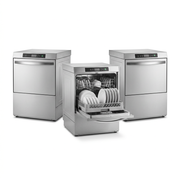
Commercial dishwashers are essential for high-volume kitchens, offering consistent hygiene, speed, and energy efficiency compared to manual washing. Whether you operate a busy café, hotel, or catering kitchen, the right commercial dishwasher means faster turnaround, cleaner dishes, and compliance with food safety standards.
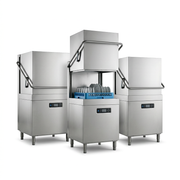
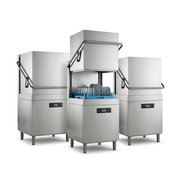
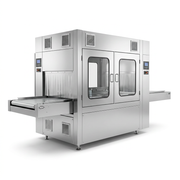
At Atlantic Equipment, we stock industry-leading undercounter, pass-through, and conveyor-style dishwashers designed for Australian hospitality standards.
-
 ESWOOD Undercounter Glasswasher SW400
$3,780.00From:$2,835.00 Rent $35.98 + GST/week
Couldn't load pickup availability
-
 ESWOOD Undercounter Dishwasher SW500
$4,950.00From:$3,713.00 Rent $47.13 + GST/week
Couldn't load pickup availability
-
 Fagor iNova Glasswasher / Dishwasher - WGT-400BDD
$5,590.00From:$4,192.50 Rent $53.21 + GST/week
Couldn't load pickup availability
-
 Modular System Glasswasher Basket Stand 4 Tray - 415770
$259.00From:$220.15 Rent $2.79 + GST/week
Couldn't load pickup availability
-
 Modular System Glasswasher Basket Trolley 4 Tray - 415771
$349.00From:$296.65 Rent $3.76 + GST/week
Couldn't load pickup availability
-
 Winterhalter UC-XL Extra Large undercounter Dishwasher Standard
$15,538.00From:$10,721.22 Rent $136.07 + GST/week
Couldn't load pickup availability
-
 Winterhalter UC-S Small undercounter Glasswasher Standard
$11,041.00From:$7,618.29 Rent $96.69 + GST/week
Couldn't load pickup availability
-
 Winterhalter UC-M Medium undercounter Dishwasher Standard
$12,123.00From:$8,364.87 Rent $106.16 + GST/week
Couldn't load pickup availability
-
 Winterhalter UC-L Large Undercounter Dishwasher Standard
$13,239.00From:$9,134.91 Rent $115.93 + GST/week
Couldn't load pickup availability
-
 Winterhalter PT-XL Extra Large pass through Dishwasher
$30,400.00From:$20,976.00 Rent $266.23 + GST/week
Couldn't load pickup availability
-
 Winterhalter PT-M Medium pass through Dishwasher Standard
$24,553.00From:$16,941.57 Rent $215.02 + GST/week
Couldn't load pickup availability
-
 Winterhalter PT-L Large pass through Dishwasher
$28,864.00From:$19,916.16 Rent $252.78 + GST/week
Couldn't load pickup availability
-
 Wexiodisk WD-90DUO - Efficient Combi Dishwasher
$66,499.00From:$49,209.00 Rent $624.58 + GST/week
Couldn't load pickup availability
-
 Wexiodisk WD-6 DUPLUS - Ergonomic Passthrough Dishwasher With DUPLUS Rinse Technology
$22,950.00From:$16,983.00 Rent $215.55 + GST/week
Couldn't load pickup availability
-
 Wexiodisk WD-4S - Undercounter Glasswasher WD-4-S - Warehouse Clearance
$9,461.00From:$6,170.00 Rent $78.31 + GST/week
Couldn't load pickup availability
-
 Wexiodisk WD-4S - Undercounter Glasswasher
$10,430.00From:$7,718.20 Rent $97.96 + GST/week
Couldn't load pickup availability
-
 Washtech UD-R - Professional Undercounter Glasswasher / Dishwasher - 500mm Rack UD-RO - Warehouse Clearance
$7,724.00From:$6,236.00 Rent $79.15 + GST/week
Couldn't load pickup availability
-
 Washtech GM-R - Polish Free Compatible - Professional Undercounter Glasswasher... GM-RO-T - Warehouse Clearance
$7,390.00From:$4,910.00 Rent $62.32 + GST/week
Couldn't load pickup availability
-
 Washtech GM - Professional Undercounter Glasswasher / Dishwasher - 450mm Rack GM-T - Warehouse Clearance
$6,210.00From:$4,140.00 Rent $52.55 + GST/week
Couldn't load pickup availability
-
 Washtech GM - Professional Undercounter Glasswasher / Dishwasher - 450mm Rack GM-T - Warehouse Clearance
$6,210.00From:$4,140.00 Rent $52.55 + GST/week
Couldn't load pickup availability
-
 Washtech GM - Professional Undercounter Glasswasher / Dishwasher - 450mm Rack GM-E - Warehouse Clearance
$5,974.00From:$4,810.00 Rent $61.05 + GST/week
Couldn't load pickup availability
-
 Washtech GL - Premium Fully Insulated Undercounter Glasswasher / Dishwasher -... GL-E - Warehouse Clearance
$8,910.00From:$6,126.00 Rent $77.75 + GST/week
Couldn't load pickup availability
-
 Washtech GL - Premium Fully Insulated Undercounter Glasswasher / Dishwasher -... GL-E - Warehouse Clearance
$8,910.00From:$6,126.00 Rent $77.75 + GST/week
Couldn't load pickup availability
-
 Washtech GE - Economy Compact Glasswasher - 365mm Rack - Warehouse Clearance
$3,960.00From:$2,797.00 Rent $35.50 + GST/week
Couldn't load pickup availability


WE’RE HERE TO ANSWER
Commercial Dishwashers FAQs
What’s the difference between boiler and boilerless commercial dishwashers?
Boiler dishwashers have a built-in boiler that pre-heats rinse water to over 82°C instantly, ensuring HACCP-compliant sanitation. Boilerless units rely on line-heated water and a heating element to raise rinse water temperatures, often requiring more time between cycles. Boiler models are preferred for high-throughput sites due to consistent, rapid rinse temperatures.
Do commercial dishwashers need 3-phase power and a direct water connection?
It depends on the model. Undercounter units generally run on single-phase power (240V), while pass-through and conveyor machines often require 3-phase (415V) due to their higher power demands. All commercial dishwashers need a cold water connection; some require hot water supply and direct drainage. Check machine specs and consult an electrician for compliance with AS/NZS 3000.
How do I clean and maintain a commercial dishwasher to maximise its lifespan?
Daily cleaning includes removing and rinsing filters, wiping down internal surfaces, and flushing spray arms. Weekly descaling (especially in hard water areas) and checking detergent systems are essential. Always follow the manufacturer’s maintenance intervals and use approved cleaning agents to prevent damage and ensure food safety compliance.
How many plates or GN pans fit in a standard commercial dishwasher rack?
A standard 500x500mm dishwasher rack holds approximately 18 to 22 dinner plates or up to 4 full-size (GN 1/1) pans depending on orientation. Special racks are available for glassware, pans, and cutlery to optimize loading. Rack capacity and cycle time should guide purchase decisions based on daily warewashing volume.
Why invest in a commercial dishwasher instead of a residential unit in a foodservice business?
Commercial dishwashers operate at higher rinse temperatures, complete cycles in under 2 minutes, and withstand continuous operation. They are HACCP-compliant and more durable under high-volume use. Residential units lack the speed, sanitation, and capacity to meet commercial health standards or cost-efficiency in professional kitchens.