


Kebab Machines
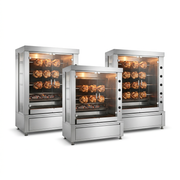
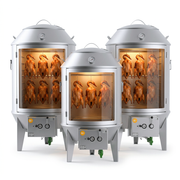
Maximise your kitchen’s efficiency and serve consistently high-quality doner with our range of commercial kebab machines. Ideal for high-demand takeaways, kebab shops, and restaurants, these units are built for precision grilling and long-lasting performance. Whether you're seeking gas kebab grills or electric kebab rotisseries, Atlantic Equipment offers solutions tailored to heavy-duty foodservice needs.
-
 GasMax Meat Rod Assembly for KB-5 Kebab Machine KB-5-MS
$150.00From:$102.00 Rent $1.29 + GST/week
Couldn't load pickup availability
-
 GasMax Meat Rod Assembly for KB-3 Kebab Machine KB-3-MS
$110.00From:$74.80 Rent $0.94 + GST/week
Couldn't load pickup availability
-
 Gasmax Meat Rod Assembly for KB-4 Kebab Machine - KB-4-MS
$130.00From:$88.40 Rent $1.12 + GST/week
Couldn't load pickup availability
-
 Gasmax KB-5LPG Semi-automatic 5 Burner LPG Kebab Machine
$2,490.00From:$1,693.20 Rent $21.49 + GST/week
Couldn't load pickup availability
-
 Yasaki Heavy Duty Stainless Steel Electric Kebab Knife KS80AS
$799.00From:$679.15 Rent $8.62 + GST/week
Couldn't load pickup availability
-
 GasMax Semi-automatic 5 Burner NG Kebab Machine KB-5
$2,490.00From:$1,693.20 Rent $21.49 + GST/week
Couldn't load pickup availability
-
 GasMax Semi-automatic 4 Burner NG Kebab Machine KB-4
$2,190.00From:$1,489.20 Rent $18.90 + GST/week
Couldn't load pickup availability
-
 GasMax Semi-automatic 4 Burner LPG Kebab Machine – KB-4LPG
$2,190.00From:$1,489.20 Rent $18.90 + GST/week
Couldn't load pickup availability
-
 GasMax Semi-automatic 3 Burner NG Kebab Machine KB-3
$1,890.00From:$1,285.20 Rent $16.31 + GST/week
Couldn't load pickup availability
-
 GasMax Semi-automatic 3 Burner LPG Kebab Machine – KB-3LPG
$1,890.00From:$1,285.20 Rent $16.31 + GST/week
Couldn't load pickup availability
-
 GasMax Meat Rod Assembly For Kb-5 Kebab Machine KB-5-MRA
$140.00From:$119.00 Rent $1.51 + GST/week
Couldn't load pickup availability
-
 GasMax Meat Rod Assembly For Kb-4 Kebab Machine – KB-4-MRA
$120.00From:$102.00 Rent $1.29 + GST/week
Couldn't load pickup availability
-
 GasMax Meat Rod Assembly For Kb-3 Kebab Machine – KB-3-MRA
$100.00From:$85.00 Rent $1.08 + GST/week
Couldn't load pickup availability
-
 ElectMax Electric Kebab Machine EKB-2
$1,890.00From:$1,285.20 Rent $16.31 + GST/week
Couldn't load pickup availability
-
 ElectMAX Cordless Electric Kebab Knife CKS100
$709.00From:$602.65 Rent $7.64 + GST/week
Couldn't load pickup availability


WE’RE HERE TO ANSWER
Kebab Machines FAQs
What’s the difference between gas and electric kebab machines?
Gas kebab machines provide higher heat output and faster recovery, using LPG or natural gas — making them ideal for high-volume service. Electric kebab machines are easier to install and safer for indoor use but may take longer to reach optimal cooking temperature. Electric versions often include digital thermostats and offer cleaner operation with fewer ventilation requirements.
What are the installation requirements for commercial kebab machines?
Commercial kebab machines require either a gas connection (LPG or natural) or a standard 240V electrical outlet, depending on the model. High-output units may also require placement under a Type 1 extraction hood due to intense radiant heat. Ensure adequate space around the unit for ventilation and safe operation.
How do you clean and maintain a kebab machine in a busy kitchen?
Daily, remove and clean the drip tray, cutting plate, and skewer rods with warm soapy water. Weekly, use a food-safe degreaser to clean burner shields and interior surfaces. Periodically inspect burners, electric motors, belts (if applicable), and thermocouples for wear. Lubricate the motor gear (if specified by the manufacturer) and schedule professional servicing every 12 months.
What meat capacity do standard kebab machines hold?
Standard commercial kebab machines hold between 20 kg to 60 kg of stacked meat, depending on the machine’s size. Entry-level models are suited for low-mid volume with ~20 kg capacity, while heavy-duty units can accommodate up to 60 kg, ideal for outlets serving 200–300 portions daily.
Why is a commercial kebab machine better than using an oven or grill?
Commercial kebab machines deliver consistent rotational cooking, ensuring even browning and internal temperature consistency without manual turning. Unlike ovens or grills that require batch processing, kebab machines provide continuous service, higher yield, and significantly lower labour reliance — crucial for high-speed foodservice environments.