


Chicken Rotisseries
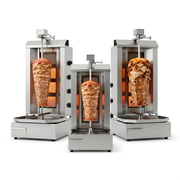
Looking to add authentic, high-volume rotisserie cooking to your commercial kitchen? Discover our premium range of commercial kebab and chicken rotisseries—designed to deliver consistent, high-yield performance with ease of use and efficiency in mind. Whether you're running a fast-paced takeaway or a full-service restaurant, our rotisserie equipment delivers on speed, flavour, and ROI.
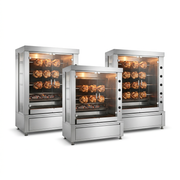
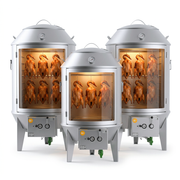
-
 Rotisserie Accessory for Synergy ST1305 Char Grill
$1,750.00From:$1,645.00 Rent $20.88 + GST/week
Couldn't load pickup availability
-
 Rotisserie Accessory for Synergy ST0905 Grill
$1,650.00From:$1,551.00 Rent $19.69 + GST/week
Couldn't load pickup availability
-
 Rotisserie Accessory for Synergy ST0605 Grill
$1,590.00From:$1,494.00 Rent $18.96 + GST/week
Couldn't load pickup availability
-
 ConvectMAX Compact Basket Rotisserie YXD-266E
$2,190.00From:$1,861.50 Rent $23.62 + GST/week
Couldn't load pickup availability
-
 Anvil 8 Bird Chicken Rotisserie
$2,000.00From:$1,610.00 Rent $20.43 + GST/week
Couldn't load pickup availability


WE’RE HERE TO ANSWER
Chicken Rotisseries FAQs
What are the differences between gas and electric kebab & chicken rotisseries?
Gas rotisseries offer faster preheating and browning with open flame for authentic charring—ideal for high-volume output. Electric models provide more precise temperature control, less grease smoke, and easier compliance with modern ventilation codes. Electric is often preferred in indoor or smaller spaces, while gas suits outdoor or industrial kitchens.
Do commercial kebab & chicken rotisseries require a Type 1 exhaust hood?
Yes. Since kebab and chicken rotisseries produce grease-laden vapours and intense heat, a certified Type 1 exhaust hood is required under most commercial kitchen regulations. This ensures proper ventilation, safety, and code compliance.
How do you clean and maintain a kebab or rotisserie machine for commercial use?
Daily cleaning includes removing drip trays, degreasing heating elements, and sanitising all food-contact surfaces. Weekly tasks involve inspecting drive motors, split assemblies, and burners. Always use manufacturer-approved degreasers and avoid abrasive pads on heating elements or glass panels to extend equipment life.
What is the capacity of a standard upright kebab rotisserie?
A typical upright kebab rotisserie can hold meat cones ranging from 20kg to 60kg. Units designed for high throughput may feature dual spits or sliding burner controls to adjust for varying cone sizes during peak service.
Why use a rotisserie over a convection oven or grill for chicken and kebabs?
Rotisseries provide even 360-degree cooking, locking in juices while creating a crispy outer crust—something grills and ovens struggle to replicate. They also reduce flipping or supervision, freeing up staff and improving consistency. Visual appeal from the rotating meats enhances customer interest and impulse orders.