


Commercial Refrigeration
Commercial Refrigeration is the backbone of any high-performance kitchen, ensuring food safety, consistency, and operational efficiency. Whether you're running a bustling café, a full-scale restaurant, or a remote mining camp kitchen, investing in commercial grade refrigeration helps you meet health codes and reduce food waste with controlled temperatures and heavy-duty performance.
-
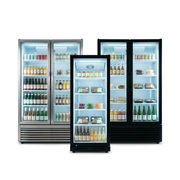
 Thermaster Three Glass Door Colourbond Upright Drink Fridge LG-1203BP
$3,390.00From:$2,881.50 Rent $36.57 + GST/week
Couldn't load pickup availability
-
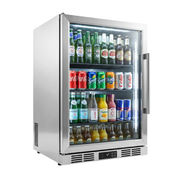
 Polar G-Series Counter Back Bar Cooler with Hinged Doors 330Ltr
$1,649.90From:$1,355.00 Rent $17.20 + GST/week
Couldn't load pickup availability
-
 Gasmax Stand Suits Qr-24E / Elpg & Rgt-24E / Elpg QR-24-SEN
$350.00From:$297.50 Rent $3.77 + GST/week
Couldn't load pickup availability
-
 GasMax Stand Suits Gg-36/Lpg GG-36-SEN
$399.00From:$339.15 Rent $4.30 + GST/week
Couldn't load pickup availability
-
 Williams Opal - Two Door Stainless Steel Under Counter Storage Freezer
$9,201.00From:$7,360.80 Rent $93.42 + GST/week
Couldn't load pickup availability
-
 Thermaster Stainless Steel Triple Door Workbench Freezer TS1800BT-3D
$3,590.00From:$3,051.50 Rent $38.72 + GST/week
Couldn't load pickup availability
-
 Thermaster Stainless Steel Triple Door Workbench Freezer TL1800BT-3D
$3,890.00From:$3,306.50 Rent $41.96 + GST/week
Couldn't load pickup availability
-
 Thermaster SlimFit Upright Glass Door Beverage Fridge - LG166FA
$1,290.00From:$1,096.50 Rent $13.91 + GST/week
Couldn't load pickup availability
-
 Thermaster Single Glass Door Colourbond Upright Drink Fridge LG-370BP
$1,490.00From:$1,266.50 Rent $16.07 + GST/week
Couldn't load pickup availability
-
 Thermaster Pizza Prep Bench TSB735
$2,599.00From:$2,209.15 Rent $28.04 + GST/week
Couldn't load pickup availability
-
 Thermaster Pizza Prep Bench TPB2400
$7,949.00From:$6,756.65 Rent $85.75 + GST/week
Couldn't load pickup availability
-
 Thermaster Pizza Prep Bench TPB1800
$5,899.00From:$5,014.15 Rent $63.64 + GST/week
Couldn't load pickup availability
-
 Thermaster Glass Door Workbench Fridge TL1500TNG
$3,490.00From:$2,966.50 Rent $37.65 + GST/week
Couldn't load pickup availability
-
 Thermaster Four-Sided Countertop Beverage Display Fridge White TCBD78W
$999.00From:$849.15 Rent $10.78 + GST/week
Couldn't load pickup availability
-
 Polar U-Series 3 Counter Door Freezer with Upstand 417Ltr
$3,299.90From:$3,094.00 Rent $39.27 + GST/week
Couldn't load pickup availability
-
 FED-X S/S Three Door Bench Fridge XUB6C18S3V
$3,360.00From:$2,284.80 Rent $28.99 + GST/week
Couldn't load pickup availability
-
 FED-X S/S Three Door Bench Freezer XUB7F18S3V
$4,080.00From:$2,774.40 Rent $35.21 + GST/week
Couldn't load pickup availability
-
 FED-X One Door Salad Prep Fridge XGNS450S
$1,690.00From:$1,149.20 Rent $14.58 + GST/week
Couldn't load pickup availability
-
 Besttop Under Bench Freezer 1800mm 460L CUF18-3
$4,060.00From:$2,842.00 Rent $36.07 + GST/week
Couldn't load pickup availability
-
 AG Three Door Commercial Worktop / Under Bench Fridge 600mm Depth SLX3100TN
$2,090.00From:$1,881.82 Rent $23.87 + GST/week
Couldn't load pickup availability
-
 AG Three 3 Sliding Door Bar Fridge Black BEER3-SD
$1,180.91From:$1,063.64 Rent $13.49 + GST/week
Couldn't load pickup availability
-
 Turbofan Stainless Steel Stand With Tray Racks SK35
$1,269.00From:$1,269.00 Rent $16.11 + GST/week
Couldn't load pickup availability
-
 Turbofan Stainless Steel Stand With Tray Racks SK33
$1,188.00From:$1,188.00 Rent $15.08 + GST/week
Couldn't load pickup availability
-
 Turbofan Stainless Steel Stand With Tray Racks SK32
$1,269.00From:$939.06 Rent $11.92 + GST/week
Couldn't load pickup availability


WE’RE HERE TO ANSWER
Commercial Refrigeration FAQs
What's the difference between upright and undercounter commercial refrigerators?
Upright commercial refrigerators are ideal for kitchens needing high-volume cold storage in a vertical footprint, offering more internal space and easier access for full-size trays and bulk goods. Undercounter refrigerators, on the other hand, are space-saving units designed to fit beneath benchtops or workspaces. They're perfect for prep stations, ensuring ingredients stay within arm's reach without taking up aisle space. Both types may include GN pan compatibility and come with either solid or glass doors based on display or back-of-house needs.
Do commercial refrigerators require a 3-phase power connection?
Most compact and mid-size commercial refrigerators operate on standard 240V single-phase power. However, heavy-duty, high-capacity models—such as multi-door upright fridges or large cold rooms—often require a 415V three-phase connection due to their higher energy demands. Always check the manufacturer’s electrical specifications to ensure compatibility with your venue's infrastructure and avoid power overloads.
What’s the best way to clean and maintain commercial refrigerators?
To maintain peak efficiency and hygiene, commercial fridges should be cleaned weekly. Key steps include: wiping down interior surfaces with food-safe cleaner, removing and sanitising shelves and gaskets, vacuuming condenser coils monthly, and inspecting door seals for integrity. Set a quarterly service check for thermostat calibration and refrigerant fluid. Avoid overpacking shelves, as blocked airflow reduces cooling efficiency. For units with auto-defrost, confirm that the drainage system is unblocked and functioning properly.
How many GN pans fit in a standard commercial upright refrigerator?
A standard 2-door upright commercial refrigerator typically accommodates between 20 to 32 GN 1/1 pans, depending on shelf configuration and internal cabinet depth. Some models are purposely designed with GN 2/1 compatibility, doubling the pan capacity per shelf. It’s important to match pan size and depth with the adjustable shelf system to maximize cold air circulation and storage efficiency.
Why should I choose commercial refrigeration over a domestic fridge in my kitchen?
Commercial refrigerators are engineered for consistent, high-volume use in demanding environments, offering faster temperature recovery, heavy-duty compressors, and NSF-approved food-safe interiors. Unlike domestic models, they maintain safe temperatures even during frequent door openings and comply with stringent food safety regulations. Their robust design and high-performance cooling translates into longer equipment life and reduced food spoilage—resulting in significant ROI for any foodservice business.