


Benchtop Fryers
Upgrade your commercial kitchen with a Benchtop Fryer—a compact, high-efficiency solution for fast-paced service environments. Designed for countertop convenience without compromising on power, these units are perfect for food trucks, cafés, and add-on deep-frying stations in larger restaurants.
Whether you're preparing crispy calamari, golden chips, or deep-fried desserts, a commercial-grade Benchtop Fryer provides consistent frying temperatures, faster cooking times, and easy maintenance compared to standard domestic units.
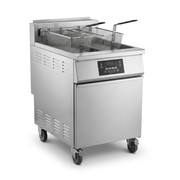
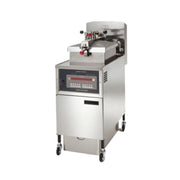
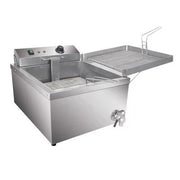
-
 Roband Single Pan Frypod 8lt
$844.00From:$717.40 Rent $9.10 + GST/week
Couldn't load pickup availability
-
 Roband Double Pan Fryer 2 x 8lt
$1,365.00From:$1,160.25 Rent $14.72 + GST/week
Couldn't load pickup availability
-
 Benchstar 2 x 5.5L Double Tank Countertop Electric Fryer - EF-82EFrom:
$297.50 Rent $3.77 + GST/week
Couldn't load pickup availability
-
 Benchstar 5.5L Single Tank Countertop Electric Fryer - EF-81EFrom:
$153.00 Rent $1.94 + GST/week
Couldn't load pickup availability
-
 Woodson Twin Pan 16L Fryer W.FRT80
$1,380.00From:$1,297.00 Rent $16.46 + GST/week
Couldn't load pickup availability
-
 Woodson Twin Pan 10L Fryer W.FRT50
$1,270.00From:$1,193.00 Rent $15.14 + GST/week
Couldn't load pickup availability
-
 Woodson Single Pan 8L Fryer W.FRS80
$795.00From:$747.00 Rent $9.48 + GST/week
Couldn't load pickup availability
-
 Woodson Single Pan 5L Fryer W.FRS50
$735.00From:$690.00 Rent $8.76 + GST/week
Couldn't load pickup availability
-
 Woodson Autolift Fryer with 11 Litre Pan
$3,240.00From:$3,045.00 Rent $38.65 + GST/week
Couldn't load pickup availability
-
 Woodson Auto Lift 8L Fryer W.FAS80
$2,400.00From:$2,256.00 Rent $28.63 + GST/week
Couldn't load pickup availability
-
 Roband Single Pan/Double Basket Frypod 11lt
$1,032.00From:$877.20 Rent $11.13 + GST/week
Couldn't load pickup availability
-
 Roband Single Pan/Double Basket Fryer 11lt
$960.00From:$816.00 Rent $10.36 + GST/week
Couldn't load pickup availability
-
 Roband Single Pan Frypod 5lt
$779.00From:$662.15 Rent $8.40 + GST/week
Couldn't load pickup availability
-
 Roband Single Pan Fryer 8lt
$777.00From:$660.45 Rent $8.38 + GST/week
Couldn't load pickup availability
-
 Roband Single Pan Fryer 5lt
$700.00From:$595.00 Rent $7.55 + GST/week
Couldn't load pickup availability
-
 Roband Double Pan Frypod 2 x 8lt
$1,506.00From:$1,280.10 Rent $16.25 + GST/week
Couldn't load pickup availability
-
 Roband Double Pan Frypod 2 x 5lt
$1,388.00From:$1,179.80 Rent $14.96 + GST/week
Couldn't load pickup availability
-
 Roband Double Pan Fryer 2 x 5lt
$1,202.00From:$1,021.70 Rent $12.96 + GST/week
Couldn't load pickup availability
-
 Roband Donut Fryer
$1,184.00From:$1,006.40 Rent $12.77 + GST/week
Couldn't load pickup availability
-
 Caterlite Light Duty Twin Tank Twin Basket Countertop Fryer 2x 3.5Ltr
$384.90From:$361.00 Rent $4.58 + GST/week
Couldn't load pickup availability
-
 Benchstar Single Tank Electric Fryer 2.4Kw TEF-81KW
$260.00From:$176.80 Rent $2.23 + GST/week
Couldn't load pickup availability
-
 Benchstar Single Tank Auto Lifting Induction Fryer - IF3500S-AL
$1,699.00From:$1,444.15 Rent $18.33 + GST/week
Couldn't load pickup availability
-
 Benchstar Double Tanks Auto Lifting Induction Fryer - IF7000D-AL
$3,199.00From:$2,719.15 Rent $34.51 + GST/week
Couldn't load pickup availability
-
 Benchstar Benchtop Electric Doughnut Fryer EF-TE
$899.00From:$764.15 Rent $9.70 + GST/week
Couldn't load pickup availability


WE’RE HERE TO ANSWER
Benchtop Fryers FAQs
What’s the difference between a gas and electric benchtop fryer?
Gas benchtop fryers heat up faster and recover temperatures more quickly, making them ideal for high-volume frying, but they require a gas connection and often need a Type 1 hood. Electric fryers are easier to install, suitable for indoor or mobile use, and offer consistent temperature control with minimal ventilation requirements.
Do commercial benchtop fryers need a ventilation hood?
Yes, most commercial-grade benchtop fryers—especially gas models—require a Type 1 hood according to local fire safety regulations. However, certain low-volume electric models may qualify for hoodless operation in specific jurisdictions. Always check your local codes before installation.
How do I clean and maintain a benchtop fryer for longevity?
Daily, filter the oil and wipe down external surfaces. Weekly, drain and clean the oil reservoir, remove baskets, and clean heating elements. Use a degreasing solution suitable for stainless steel. Regularly inspect elements, thermostats, and gaskets for wear to ensure safe, efficient operation.
What capacity fryer do I need for 10kg of chips per hour?
To produce 10kg of chips per hour, a benchtop fryer with a minimum 10L oil capacity and a 3kW+ heating element is recommended. A twin basket unit or a high-output single basket fryer with quick recovery time ensures consistent results during peak hours.
Why choose a benchtop fryer over a full-size floor fryer?
Benchtop fryers offer space-saving design, lower capital expense, and simplified setup—ideal for small kitchens, food trucks, or as a secondary fryer line. While not built for extreme volume, they provide excellent performance per square inch, especially for cafés and QSRs with tight spatial constraints.