


Stainless Steel
Stainless Steel is the gold standard in commercial kitchens due to its durability, hygiene, and superior resistance to corrosion and impact. Whether you're fitting out a new venue or upgrading key prep and storage infrastructure, commercial-grade stainless steel ensures long-term performance under heavy-duty use.
-
 Waldorf Bold SFLB8900-CD - 900mm Solid Fuel Grill - Low Back Version - Cabinet Base with Doors
$12,782.00From:$9,458.68 Rent $120.04 + GST/week
Couldn't load pickup availability
-
 Roband Counter Top Bain Marie 6 x 1/3 size 100mm pans
$1,296.00From:$1,101.60 Rent $13.97 + GST/week
Couldn't load pickup availability
-
 Butcherquip Biltong Cabinet Large
$4,600.00From:$3,703.00 Rent $47.00 + GST/week
Couldn't load pickup availability
-
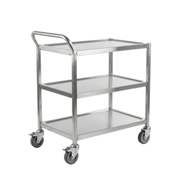
 TRS1015 Multi-use Trolley GN / 600 x 400
$480.00From:$386.40 Rent $4.90 + GST/week
Couldn't load pickup availability
-
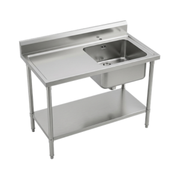
 Vogue Single Bowl Sink L/H Drainer
$742.40From:$696.00 Rent $8.83 + GST/week
Couldn't load pickup availability
-
 Vogue Double Bowl Sink R/H Drainer
$1,099.90From:$1,031.00 Rent $13.09 + GST/week
Couldn't load pickup availability
-
 Modular Systems Sink Bench With Splashback 1400Mm SSB6-1400R
$2,271.00From:$1,930.35 Rent $24.50 + GST/week
Couldn't load pickup availability
-
 Modular Systems Single Sink Bench Centre 1200x600x900mm - 1200-6-SSBC
$679.00From:$577.15 Rent $7.32 + GST/week
Couldn't load pickup availability
-
 3Monkeez Stainless Steel Compact Dual Bench Mount Pre-Rinse with Optional Pot Filler
$670.00From:$670.00 Rent $8.50 + GST/week
Couldn't load pickup availability
-
 Modular Systems 635 x 838mm Stainless Steel Commercial Floor Mop Sink 12″ Deep Bowl - FMS-648441From:
$721.65 Rent $9.15 + GST/week
Couldn't load pickup availability
-
 Modular Systems 635 x 838mm Stainless Steel Commercial Floor Mop Sink 6″ Deep Bowl - FMS-648425From:
$679.15 Rent $8.62 + GST/week
Couldn't load pickup availability
-
 Modular Systems 533 x 635mm Stainless Steel Commercial Floor Mop Sink 6″ Deep Bowl - FMS-536425From:
$509.15 Rent $6.46 + GST/week
Couldn't load pickup availability
-
 Modular Systems 533 x 635mm Stainless Steel Commercial Floor Mop Sink 12″ Deep Bowl - FMS-536441From:
$679.15 Rent $8.62 + GST/week
Couldn't load pickup availability
-
 Fagor 2 Door Refrigerated Distribution Trolley - ECFF-40HCFrom:
$15,036.50 Rent $190.84 + GST/week
Couldn't load pickup availability
-
 Bonvue Deluxe 600mm Square Glass Cake Display Cabinet - SC060FA-2XBFrom:
$3,731.50 Rent $47.35 + GST/week
Couldn't load pickup availability
-
 Bonvue Deluxe 1200mm Square Glass Cake Display Cabinet - SC120FA-2XBFrom:
$4,411.50 Rent $55.99 + GST/week
Couldn't load pickup availability
-
 Bonvue Deluxe 900mm Square Glass Cake Display Cabinet - SC090FA-2XBFrom:
$3,901.50 Rent $49.51 + GST/week
Couldn't load pickup availability
-
 Fagor 1 Door Refrigerated Distribution Trolley - ECFF-20HCFrom:
$10,956.50 Rent $139.06 + GST/week
Couldn't load pickup availability
-
 FED-X 2 Door 7 Drawer Marble Top Pizza Make-Up Bench 2020mm — XPZ3600TNDFrom:
$4,692.00 Rent $59.55 + GST/week
Couldn't load pickup availability
-
 Bonvue Deluxe 1800mm Square Glass Cake Display Cabinet - SC180FA-2XBFrom:
$5,516.50 Rent $70.01 + GST/week
Couldn't load pickup availability
-
 BENCHSTAR 2 Drawers GN 1/1 Food Warming Drawer — EDW-2GNFrom:
$2,541.50 Rent $32.25 + GST/week
Couldn't load pickup availability
-
 Bonvue Deluxe 1500mm Square Glass Cake Display Cabinet - SC150FA-2XBFrom:
$5,091.50 Rent $64.62 + GST/week
Couldn't load pickup availability
-
 BENCHSTAR 3 Drawers GN 1/1 Food Warming Drawer — EDW-3GNFrom:
$3,391.50 Rent $43.04 + GST/week
Couldn't load pickup availability
-
 BONVUE Noir Tot 1500mm 2 Shelves Square Cake Display Cabinet - CVS150-2BFrom:
$3,476.50 Rent $44.12 + GST/week
Couldn't load pickup availability


WE’RE HERE TO ANSWER
Stainless Steel FAQs
What’s the difference between 304 and 430 stainless steel in commercial kitchens?
Grade 304 stainless steel contains 18% chromium and 8% nickel, offering superior corrosion resistance and hygiene—ideal for food prep areas. Grade 430, with lower nickel content, is more cost-effective but less resistant to rust, making it best for dry storage or non-critical surfaces.
Do stainless steel benches require specific wall or floor mounting in commercial kitchens?
Yes. Wall-mounted benches typically need solid backing (brick or reinforced studwork) for secure anchoring, while free-standing stainless steel units must be leveled on non-slip feet or bolted to the floor to meet safety codes. Check load ratings before installation.
How do I clean and maintain stainless steel surfaces to avoid rust or staining?
Use a neutral-pH detergent and soft cloth daily. Rinse with warm water and dry completely to prevent water spots. Avoid harsh chemicals like bleach or abrasive tools like steel wool, which can degrade the chrome oxide layer that protects against corrosion.
How many GN pans can fit in a standard stainless steel gastronorm bench?
A standard 1200mm stainless steel gastronorm bench can typically hold between 2 to 4 full-size GN 1/1 pans, depending on depth and configuration. Custom layouts may include refrigerated wells or overshelves for additional capacity.
Why is stainless steel a better choice than laminate or mild steel in commercial kitchens?
Stainless steel offers unmatched durability, hygiene, and heat resistance. Unlike laminate or mild steel, it won't warp, crack, or absorb spills—making it compliant with food safety laws and reducing long-term maintenance costs.