


Glass washers
From high-volume bars to fine-dining restaurants, Glass washers are a must-have for efficient, hygienic glassware turnover. Whether you operate a hotel lounge or compact café, choosing the right commercial glass washer ensures spotless results, faster service, and reduced labour costs.
Explore the latest features in undercounter, passthrough and rotary industrial glass washers for consistent performance even in high-demand environments.
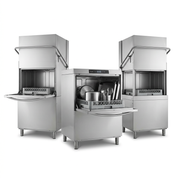
-
 ESWOOD Undercounter Glasswasher SW400
$3,780.00From:$2,835.00 Rent $35.98 + GST/week
Couldn't load pickup availability
-
 Fagor iNova Glasswasher / Dishwasher - WGT-400BDD
$5,590.00From:$4,192.50 Rent $53.21 + GST/week
Couldn't load pickup availability
-
 Modular System Glasswasher Basket Stand 4 Tray - 415770
$259.00From:$220.15 Rent $2.79 + GST/week
Couldn't load pickup availability
-
 Modular System Glasswasher Basket Trolley 4 Tray - 415771
$349.00From:$296.65 Rent $3.76 + GST/week
Couldn't load pickup availability
-
 Washmaster Underbench Commercial Glasswash WM40U
$5,484.00From:$3,290.00 Rent $41.76 + GST/week
Couldn't load pickup availability
-
 Fagor Evo-Concept Glass Washer With Drain Pump And Detergent & Rinse Dispenser Cold Rinse CO-402BDD
$5,250.00From:$3,937.50 Rent $49.97 + GST/week
Couldn't load pickup availability
-
 Asber Tech Line Underbench Glass/Dishwasher - GE-400BDD
$3,690.00From:$3,136.50 Rent $39.80 + GST/week
Couldn't load pickup availability
-
 Winterhalter UC-S Small undercounter Glasswasher Standard
$11,041.00From:$7,618.29 Rent $96.69 + GST/week
Couldn't load pickup availability
-
 Wexiodisk WD-4S - Undercounter Glasswasher WD-4-S - Warehouse Clearance
$9,461.00From:$6,170.00 Rent $78.31 + GST/week
Couldn't load pickup availability
-
 Wexiodisk WD-4S - Undercounter Glasswasher
$10,430.00From:$7,718.20 Rent $97.96 + GST/week
Couldn't load pickup availability
-
 Washtech UD-R - Professional Undercounter Glasswasher / Dishwasher - 500mm Rack UD-RO - Warehouse Clearance
$7,724.00From:$6,236.00 Rent $79.15 + GST/week
Couldn't load pickup availability
-
 Washtech GM-R - Polish Free Compatible - Professional Undercounter Glasswasher... GM-RO-T - Warehouse Clearance
$7,390.00From:$4,910.00 Rent $62.32 + GST/week
Couldn't load pickup availability
-
 Washtech GM - Professional Undercounter Glasswasher / Dishwasher - 450mm Rack GM-T - Warehouse Clearance
$6,210.00From:$4,140.00 Rent $52.55 + GST/week
Couldn't load pickup availability
-
 Washtech GM - Professional Undercounter Glasswasher / Dishwasher - 450mm Rack GM-T - Warehouse Clearance
$6,210.00From:$4,140.00 Rent $52.55 + GST/week
Couldn't load pickup availability
-
 Washtech GM - Professional Undercounter Glasswasher / Dishwasher - 450mm Rack GM-E - Warehouse Clearance
$5,974.00From:$4,810.00 Rent $61.05 + GST/week
Couldn't load pickup availability
-
 Washtech GL - Premium Fully Insulated Undercounter Glasswasher / Dishwasher -... GL-E - Warehouse Clearance
$8,910.00From:$6,126.00 Rent $77.75 + GST/week
Couldn't load pickup availability
-
 Washtech GL - Premium Fully Insulated Undercounter Glasswasher / Dishwasher -... GL-E - Warehouse Clearance
$8,910.00From:$6,126.00 Rent $77.75 + GST/week
Couldn't load pickup availability
-
 Washtech GE - Economy Compact Glasswasher - 365mm Rack - Warehouse Clearance
$3,960.00From:$2,797.00 Rent $35.50 + GST/week
Couldn't load pickup availability
-
 Washtech GE - Economy Compact Glasswasher - 365mm Rack - Warehouse Clearance
$3,815.00From:$2,797.00 Rent $35.50 + GST/week
Couldn't load pickup availability
-
 Washtech GE - Economy Compact Glasswasher - 365mm Rack - Warehouse Clearance
$3,960.00From:$2,797.00 Rent $35.50 + GST/week
Couldn't load pickup availability
-
 Kitchen Knock Glasswasher Basket Trolley 4 Tray 415771
$320.00From:$320.00 Rent $4.06 + GST/week
Couldn't load pickup availability
-
 ESWOOD Undercounter Glasswasher IW3N
$6,210.00From:$4,658.00 Rent $59.12 + GST/week
Couldn't load pickup availability
-
 Classeq C500 Medium Glasswasher & Dishwasher
$7,268.00From:$5,014.92 Rent $63.64 + GST/week
Couldn't load pickup availability
-
 Classeq C400 Small Glasswasher & Dishwasher
$4,766.00From:$3,288.54 Rent $41.73 + GST/week
Couldn't load pickup availability


WE’RE HERE TO ANSWER
Glass washers FAQs
What’s the difference between rotary and undercounter glass washers?
Undercounter glass washers are compact units that fit beneath benches, designed for moderate glass volumes (up to 1,000 glasses/hour). Rotary glass washers use a rotating circular rack system, continuously moving glassware through wash and rinse zones—ideal for high-demand venues like stadiums and clubs where turnover must exceed 2,000 glasses/hour.
Do commercial glass washers require a direct water and drainage connection?
Yes, all commercial glass washers require a direct cold or hot water connection—ideally 2-4 bar pressure—and a wastewater drainage system. It's advisable to install a water softener in hard water areas to prevent scale buildup. Some models also include or require an external drain pump if drainage is above floor level.
How do I properly clean and maintain a commercial glass washer?
Daily maintenance includes emptying and cleaning filters, wiping internal surfaces, and running an end-of-day rinse cycle. Weekly descaling (especially in hard water regions) prevents scale buildup on heating elements and rinse jets. Monthly checks should include pump strainers, seals, and flow arms. Choose models with self-cleaning functions for added convenience.
How many glasses can a standard undercounter glass washer clean per hour?
A typical undercounter glass washer with a 90–180 second cycle and one 400x400mm rack can clean between 600 to 1,000 glasses per hour, depending on glass size and soak pre-wash conditions. High-speed models with shorter cycles or double racks can increase throughput in fast-paced bar environments.
Why invest in a commercial glass washer instead of a standard dishwasher?
Glass washers use lower pressure and controlled temperatures to safely clean fragile glassware without etching or breakage. They deliver faster cycles and high-rinse temperatures (82°C+) for rapid sanitisation. Standard dishwashers lack the correct water filtration, rack dimensions, and jet design needed for consistent streak-free results on glass.