


Planetary Mixers
Upgrade your commercial kitchen with reliable, high-performance Planetary Mixers built for bakeries, restaurants, and high-volume food prep. Whether you're whipping batters, kneading heavy doughs, or emulsifying sauces, our commercial-grade mixers offer precision, consistency, and unmatched versatility.
Explore industry-trusted brands with multiple bowl capacities, variable speeds, and powerful motor configurations designed to handle any culinary challenge with ease.
-
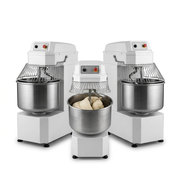
 Mecnosud SMM9944 Fixed Head/Bowl Economy Model Spiral Mixer 50Lt
$4,600.00From:$3,703.00 Rent $47.00 + GST/week
Couldn't load pickup availability
-
 AG Equipment 30 Litre Commercial Spiral Mixer AG-SPMF30
$1,726.00From:$1,554.55 Rent $19.72 + GST/week
Couldn't load pickup availability
-
 Yasaki Tilting Head Dough Mixer - HRM-50
$4,390.00From:$3,731.50 Rent $47.35 + GST/week
Couldn't load pickup availability
-
 Yasaki Tilting Head Dough Mixer - HRM-30
$3,490.00From:$2,966.50 Rent $37.65 + GST/week
Couldn't load pickup availability
-
 Yasaki Tilting Head Dough Mixer - HRM-20
$2,890.00From:$2,456.50 Rent $31.17 + GST/week
Couldn't load pickup availability
-
 Tyrone Heavy Duty Planetary Mixer 60L - B60GX
$11,990.00From:$10,191.50 Rent $129.35 + GST/week
Couldn't load pickup availability
-
 Yasaki 10 Litre Heavy Duty Mixer - B10KG
$1,390.00From:$1,181.50 Rent $14.99 + GST/week
Couldn't load pickup availability
-
 Yasaki Tilting Head Removable Bowl 20L Spiral Mixer - HTD-20L
$2,990.00From:$2,541.50 Rent $32.25 + GST/week
Couldn't load pickup availability
-
 Tyrone Heavy Duty Planetary Mixer 60L B60GX/S
$11,990.00From:$10,191.50 Rent $129.35 + GST/week
Couldn't load pickup availability
-
 Tyrone Heavey Duty Planetary Mixer 80L – B80GX
$12,990.00From:$11,041.50 Rent $140.14 + GST/week
Couldn't load pickup availability
-
 Tyrone Heavey Duty Planetary Mixer 20L - B20GX
$2,590.00From:$2,201.50 Rent $27.94 + GST/week
Couldn't load pickup availability
-
 Tyrone Heavey Duty Planetary Mixer 10L – B10GX
$1,990.00From:$1,691.50 Rent $21.46 + GST/week
Couldn't load pickup availability
-
 Tyron Heavey Duty Planetary Mixer 40L B40GX
$4,690.00From:$3,986.50 Rent $50.59 + GST/week
Couldn't load pickup availability
-
 Tyron Fixed Head Heavy Duty 66L Spiral Mixer – SCP66
$5,490.00From:$4,666.50 Rent $59.22 + GST/week
Couldn't load pickup availability
-
 Tyron Fixed Head Heavy Duty 55L Spiral Mixer – SCP55
$5,190.00From:$4,411.50 Rent $55.99 + GST/week
Couldn't load pickup availability
-
 Tyron Fixed Head Heavy Duty 45L Spiral Mixer – SCP45
$4,090.00From:$3,476.50 Rent $44.12 + GST/week
Couldn't load pickup availability
-
 Tyron Fixed Head Heavy Duty 34L Spiral Mixer – SCP34
$3,390.00From:$2,881.50 Rent $36.57 + GST/week
Couldn't load pickup availability
-
 Tyron Fixed Head Heavy Duty 23L Spiral Mixer – SCP23
$2,790.00From:$2,371.50 Rent $30.09 + GST/week
Couldn't load pickup availability
-
 Robot Coupe 9L Planetary Mixer
$5,165.00From:$4,596.85 Rent $58.33 + GST/week
Couldn't load pickup availability
-
 Robot Coupe 76L Planetary Mixer
$25,225.00From:$22,450.25 Rent $284.94 + GST/week
Couldn't load pickup availability
-
 Robot Coupe 8L Planetary Mixer
$2,650.00From:$2,358.50 Rent $29.93 + GST/week
Couldn't load pickup availability
-
 Robot Coupe 62L Planetary Mixer
$14,850.00From:$13,216.50 Rent $167.74 + GST/week
Couldn't load pickup availability
-
 Robot Coupe 5L Planetary Mixer
$1,415.00From:$1,259.35 Rent $15.98 + GST/week
Couldn't load pickup availability
-
 Robot Coupe 41L Planetary Mixer
$12,780.00From:$11,374.20 Rent $144.36 + GST/week
Couldn't load pickup availability


WE’RE HERE TO ANSWER
Planetary Mixers FAQs
What’s the difference between gear-driven and belt-driven planetary mixers?
Gear-driven Planetary Mixers use hardened steel gears for higher torque and durability, making them ideal for dense doughs like bread or pizza. They handle heavier loads and maintain consistent speed under strain. Belt-driven mixers, on the other hand, are typically quieter and easier to maintain but perform best with lighter batters and cream-based mixes.
Do commercial planetary mixers require a specific electrical phase connection?
Yes. Smaller mixers (e.g., 10-20L) typically run on single-phase 240V power, making them plug-and-play for most commercial kitchens. Larger planetary mixers (30L and above), especially those with high-torque motors above 1.5HP, often require 3-phase 415V power for optimal performance. Always verify your site’s power availability before installation.
How do I clean and service a planetary mixer for long-term durability?
Start by detaching the bowl and agitator, then wash them with warm soapy water. Wipe down the housing with a damp cloth. For gear-driven models, regularly check and top off gearbox oil. Inspect belts, gears, and agitator attachments for wear monthly. Don't forget to clean the ventilation vents to prevent motor overheating. Lubricate moving parts such as the bowl lift and arm locks every 6 months.
What is the ideal bowl capacity for a bakery producing 50kg of dough daily?
For 50kg of dough per day, a 30L planetary mixer is generally sufficient if mixed in batches. However, to reduce batching and increase workflow efficiency, a 40L mixer is ideal. It can handle dough batches of 15–18 kg at a time, allowing for fewer prep sessions while maintaining kneading consistency and motor performance.
Why should I choose a planetary mixer over a spiral mixer?
Planetary mixers offer versatility—perfect for bakeries and kitchens that work with a variety of mixes such as batters, cream, icing, and light to medium doughs. They come with interchangeable tools like whip, paddle, and dough hook. Spiral mixers, while superior for heavy dough hydration and gluten development, are limited to dough-only applications. If your menu demands flexibility, a planetary mixer is a better long-term investment.