


Cooking Equipment
Looking for high-performance commercial cooking equipment? At Atlantic Equipment, we supply top-tier solutions designed to meet the demands of busy professional kitchens. From gas ranges to combination steam ovens, our lineup delivers the reliability and output chefs trust in fast-paced environments.
Whether you're outfitting a new restaurant or upgrading existing tools, our cooking equipment range ensures optimal workflow, energy efficiency, and capacity to match your service volume.
-
 Convect Max Digital Convection Oven with Grill YXD-3DI
$1,590.00From:$1,351.50 Rent $17.15 + GST/week
Couldn't load pickup availability
-
 Woodson Single Induction Hob - 10 Amp
$600.00From:$564.00 Rent $7.16 + GST/week
Couldn't load pickup availability
-
 Waldorf Bold SFLB8900-CD - 900mm Solid Fuel Grill - Low Back Version - Cabinet Base with Doors
$12,782.00From:$9,458.68 Rent $120.04 + GST/week
Couldn't load pickup availability
-
 Thor 4 Burner Natural Gas Oven Range TR-4F
$4,950.00From:$4,500.00 Rent $57.12 + GST/week
Couldn't load pickup availability
-
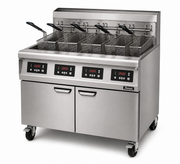
 Roband Double Pan Fryer 2 x 8lt
$1,365.00From:$1,160.25 Rent $14.72 + GST/week
Couldn't load pickup availability
-
 GasMax Three Burner Ng Griddle Top GG-36
$1,990.00From:$1,353.20 Rent $17.17 + GST/week
Couldn't load pickup availability
-
 GasMax Gasmax 6 Burner With Oven Flame Failure GBS6TLPG
$4,950.00From:$3,366.00 Rent $42.72 + GST/week
Couldn't load pickup availability
-
 Gasmax 6 Burner With Oven Flame Failure GBS6TS
$4,950.00From:$3,366.00 Rent $42.72 + GST/week
Couldn't load pickup availability
-
 CookRite Freestanding Gas Stove 6 Burners Cooktop With Oven NG AT80G6B-O-NG
$6,319.00From:$4,107.35 Rent $52.13 + GST/week
Couldn't load pickup availability
-
 Benchstar Large Single Contact Grill GH-811EE
$590.00From:$501.50 Rent $6.36 + GST/week
Couldn't load pickup availability
-
 Apuro Heavy Duty Induction Cooktop 3kW
$439.90From:$319.00 Rent $4.05 + GST/week
Couldn't load pickup availability
-
 Apuro Heavy Duty Double Induction Cooktop 7kW
$1,099.90From:$797.00 Rent $10.12 + GST/week
Couldn't load pickup availability
-
 Benchstar Single Tank Auto Lifting Electric Fryer - EF-3250SAL
$1,299.00From:$1,104.15 Rent $14.01 + GST/week
Couldn't load pickup availability
-
 Fagor Kore 700 Series Bench Top Electric Chargrill B-E710
$9,690.00From:$7,267.50 Rent $92.23 + GST/week
Couldn't load pickup availability
-
 Fagor Kore 900 Series Bench Top Electric Chargrill B-E910
$12,590.00From:$9,442.50 Rent $119.84 + GST/week
Couldn't load pickup availability
-
 Fagor 900 Series Electric Chrome 1 Zone Griddle FTE-C9-05L
$6,679.00From:$5,009.25 Rent $63.58 + GST/week
Couldn't load pickup availability
-
 ElectMax 900 Series Induction Single Fryer with Splashback - IFS10-30L
$5,190.00From:$3,529.20 Rent $44.79 + GST/week
Couldn't load pickup availability
-
 Fagor 900 Series Electric Chrome 2 Zone Griddle FTE-C9-10L
$8,999.00From:$6,749.25 Rent $85.66 + GST/week
Couldn't load pickup availability
-
 GH-610E MAX~ELECTRIC Griddle
$1,050.00From:$892.50 Rent $11.32 + GST/week
Couldn't load pickup availability
-
 BakerMax Black Electric Panther Pizza Deck Oven - EP-2E
$3,390.00From:$2,881.50 Rent $36.57 + GST/week
Couldn't load pickup availability
-
 BakerMax Black Panther Electric Pizza Deck Oven - EP-1-SDE
$3,390.00From:$2,881.50 Rent $36.57 + GST/week
Couldn't load pickup availability
-
 Double Tank Electric Fryer TEF-82KW
$450.00From:$382.50 Rent $4.85 + GST/week
Couldn't load pickup availability
-
 BakerMax Electric Pizza Ovens Single Deck 4 x 40cm - TP-2-1
$3,790.00From:$3,221.50 Rent $40.88 + GST/week
Couldn't load pickup availability
-
 BakerMax Pizza Ovens Electric Single Deck 6 x 35cm - TP-2-1-SD
$4,490.00From:$3,816.50 Rent $48.43 + GST/week
Couldn't load pickup availability


WE’RE HERE TO ANSWER
Cooking Equipment FAQs
What's the difference between gas and electric commercial cooking equipment?
Gas cooking equipment offers rapid heat control and is preferred in fast-paced kitchens due to its immediate response. Electric cooking equipment provides even heat distribution, easier installation in non-gas facilities, and often lower maintenance, making it suitable for consistent production environments like bakeries or schools.
Do I need a Type 1 hood for all cooking equipment?
Type 1 hoods are required for commercial cooking equipment that produces grease, smoke, or vapor—such as deep fryers, grills, and ranges. If you're using ovens or steamers that produce minimal emissions, a Type 2 hood or no hood may be sufficient, but local fire and health codes always apply.
How do I maintain a commercial range or oven to extend its lifespan?
Daily cleaning is essential—wipe down burners, check pilot lights, and remove food debris. Perform monthly checks on thermostats, oven gaskets, and gas valves. For steam equipment, descale quarterly. Schedule annual professional servicing to inspect safety valves, burners, and controllers to avoid downtime.
How many GN pans can fit in a standard commercial combi oven?
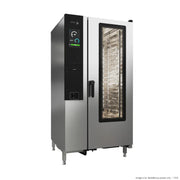
A standard 10-tray combi oven can accommodate ten 1/1 GN pans, stored horizontally on removable wire racks. Smaller units may fit 6 GN pans, while large roll-in models can handle up to 20. Always verify GN sizing compatibility (1/1, 2/3, etc.) with the manufacturer’s rack layout.
Why invest in commercial cooking equipment over residential models?
Commercial cooking equipment is built for durability, high-output usage, and speed—crucial for busy kitchens. With reinforced components, faster recovery times, and increased pan capacity, professional-grade units ensure food safety, consistency, and a better return on investment through lower downtime and higher throughput.