


Food Preparation Equipment
Food Preparation Equipment is essential for streamlining workflow in commercial kitchens, increasing output, and maintaining consistent food quality. Whether you run a high-volume restaurant or a school cafeteria, investing in the right commercial-grade preparation appliances makes all the difference to efficiency and safety.
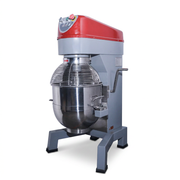
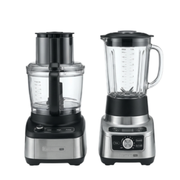
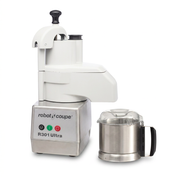
-
 Yasaki Heavy Duty Powerful Motor Citrus Juicers CJ-50AH
$699.00From:$475.32 Rent $6.03 + GST/week
Couldn't load pickup availability
-
 Robot Coupe CMP300VV Immersion Blender Stick Blender
$1,320.00From:$1,174.80 Rent $14.90 + GST/week
Couldn't load pickup availability
-
 Mecnosud SMM9944 Fixed Head/Bowl Economy Model Spiral Mixer 50Lt
$4,600.00From:$3,703.00 Rent $47.00 + GST/week
Couldn't load pickup availability
-
 Hamilton Beach Tempest Blender
$1,480.00From:$1,191.00 Rent $15.12 + GST/week
Couldn't load pickup availability
-
 Apuro Digital Bar Blender with Sound Enclosure 2.5Ltr
$879.90From:$558.00 Rent $7.08 + GST/week
Couldn't load pickup availability
-
 Apuro Bar Blender 2.5Ltr 1.68kW variable speed CR836-A
$659.90From:$446.00 Rent $5.66 + GST/week
Couldn't load pickup availability
-
 AG Equipment 30 Litre Commercial Spiral Mixer AG-SPMF30
$1,726.00From:$1,554.55 Rent $19.72 + GST/week
Couldn't load pickup availability
-
 Yasaki Variable Speed Stick Blender 550mm Shaft ISB550V
$599.00From:$407.32 Rent $5.17 + GST/week
Couldn't load pickup availability
-
 Yasaki Variable Speed Stick Blender 450mm Shaft ISB450V
$499.00From:$339.32 Rent $4.30 + GST/week
Couldn't load pickup availability
-
 Yasaki Variable Speed Stick Blender 350mm Shaft ISB350V
$499.00From:$339.32 Rent $4.30 + GST/week
Couldn't load pickup availability
-
 Yasaki Variable Speed Stick Blender 225mm Shaft ISB160V
$399.00From:$271.32 Rent $3.44 + GST/week
Couldn't load pickup availability
-
 Yasaki Tilting Head Removable Bowl 20L Spiral Mixer - HTD-20L
$2,990.00From:$2,033.20 Rent $25.80 + GST/week
Couldn't load pickup availability
-
 Yasaki Heavy Duty Powerful Motor Citrus Juicers CJ-50AC
$599.00From:$407.32 Rent $5.17 + GST/week
Couldn't load pickup availability
-
 Yasaki Durable Waterproof Fast Speed Ice Shaver AK2-ICS
$1,299.00From:$883.32 Rent $11.21 + GST/week
Couldn't load pickup availability
-
 Yasaki Durable Waterproof Fast Speed Ice Shaver AK1-ICS
$799.00From:$543.32 Rent $6.89 + GST/week
Couldn't load pickup availability
-
 Yasaki Double Speeds Bowl Cutter 12L BC-12V2
$2,590.00From:$1,761.20 Rent $22.35 + GST/week
Couldn't load pickup availability
-
 Yasaki Double Speeds 8L Table Top Cutter Mixer / Bowl Cutter BC-8V2
$2,390.00From:$1,625.20 Rent $20.62 + GST/week
Couldn't load pickup availability
-
 Yasaki Double Speeds 5L Table Top Cutter Mixer / Bowl Cutter BC-5V2
$1,990.00From:$1,353.20 Rent $17.17 + GST/week
Couldn't load pickup availability
-
 Waring Torq 2 Bar Blender TBB175NNA
$1,099.90From:$875.00 Rent $11.11 + GST/week
Couldn't load pickup availability
-
 Waring Raptor 2Ltr BPA-Free Copolyester Container Complete with Blade and Lid CAC95I
$474.00From:$444.00 Rent $5.64 + GST/week
Couldn't load pickup availability
-
 Waring hi power electronic keypad blender MX1100XTXNNA
$1,539.90From:$1,375.00 Rent $17.45 + GST/week
Couldn't load pickup availability
-
 Waring hi power electronic keypad blender MX1050XTXNNA
$1,429.90From:$1,281.00 Rent $16.26 + GST/week
Couldn't load pickup availability
-
 Vogue Vegetable Dicer with 9.5mm Blade
$192.40From:$180.00 Rent $2.28 + GST/week
Couldn't load pickup availability
-


WE’RE HERE TO ANSWER
Food Preparation Equipment FAQs
What’s the difference between bench-top and floor-standing food preparation equipment?
Bench-top models are compact and suited for small-scale or low-output operations, offering portability and flexibility in tight kitchen spaces. Floor-standing equipment, on the other hand, is designed for high-volume production, with greater motor capacity, bowl size, and throughput. For example, a bench-top planetary mixer may handle 7 litres, while a floor-standing spiral mixer can handle over 60 litres of dough—ideal for bakeries or institutional kitchens.
Does commercial food preparation equipment require three-phase power?
Not all units require three-phase power, but many high-capacity models—such as heavy-duty mixers, meat mincers, or bulk food processors—do for continuous and balanced operation. Three-phase power supports larger motors and ensures less strain, better energy efficiency, and reduced heat generation. Always check the machine's data plate or spec sheet before installation to ensure correct power compatibility.
How do I clean and maintain a commercial vegetable slicer?
Start by disconnecting the machine from power. Remove the blades, hoppers, and pusher arms. Use a mild detergent and warm water to clean all food contact surfaces. Rinse thoroughly and dry before reassembly. Regularly inspect blades for dullness or damage. Depending on usage, lubricate moving parts monthly and schedule bi-annual professional maintenance to check seals, electrical components, and alignment.
What capacity should I look for in a commercial planetary mixer?
Capacity depends on your batch size and production volume. Planetary mixers are available from 7L to 80L+. A 20L planetary mixer suits cafés or small bakeries making occasional doughs and batters. For operations with regular cake or pizza production, a 40L or 60L mixer would be more efficient. Always consider bowl size alongside motor power (HP or wattage) to avoid overworking the unit.
Why is commercial food preparation equipment better for consistency and ROI?
Commercial food prep machines deliver precise, repeatable cuts, mixes, and blends—reducing human error and ingredient waste. Faster prep times lower labour costs and improve staff workflow, especially during peak service hours. Industrial components are designed for durability under heavy loads, offering longer service life and a better return on investment compared to domestic or manual alternatives.