


Rice Cookers
Discover our range of commercial rice cookers designed for high-volume kitchens, restaurants, and catering services. Built with durable components and advanced cooking technology, our industrial rice cookers ensure consistent, fluffy results every time—whether you're cooking jasmine, sushi, or brown rice in bulk.
Perfect for chefs and foodservice operators seeking efficiency and quality, our rice cookers are engineered to handle intense daily use while minimizing energy waste and cooking time.
-

-
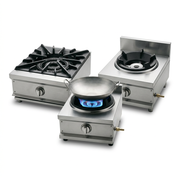
 Robalec Rice Cooker RB-SW7200
$710.00From:$603.50 Rent $7.65 + GST/week
Couldn't load pickup availability
-
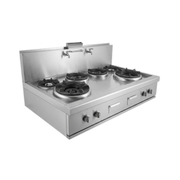
 Robalec Rice Cooker RB-SW5400
$476.00From:$404.60 Rent $5.13 + GST/week
Couldn't load pickup availability
-
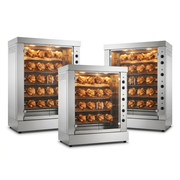
 Robalec Rice Cooker & Warmer
$769.00From:$653.65 Rent $8.29 + GST/week
Couldn't load pickup availability
-
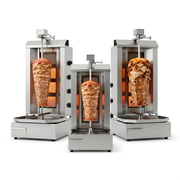
 Robalec Rice Cooker - large
$774.00From:$657.90 Rent $8.34 + GST/week
Couldn't load pickup availability


WE’RE HERE TO ANSWER
Rice Cookers FAQs
What are the differences between gas and electric commercial rice cookers?
Gas rice cookers heat up faster and are ideal for high-output kitchens, often found in Asian restaurants and buffets. They rely on a direct flame and are generally more powerful, producing batches of rice quickly. Electric rice cookers, meanwhile, offer greater convenience and safety with plug-and-play installation and advanced features like automatic warming and programmable timers. For kitchens without gas hookups or needing precision, electric cookers are the better choice.
Do commercial rice cookers require special electrical connections or ventilation?
Most electric commercial rice cookers run on standard 230V single-phase power and do not require special ventilation like a Type 1 or Type 2 hood, as they emit minimal vapors. Gas models, however, may require a Type A flue or hood installation if used indoors, depending on local regulations. Always check the product's wattage and confirm with an electrician if you're integrating multiple appliances on a single circuit.
How do you maintain and clean a commercial rice cooker for long-term reliability?
To extend the life of a commercial rice cooker, always unplug it and allow the unit to cool before cleaning. Remove the inner pot and wash with warm, soapy water—never use abrasive scrubbers as they can damage the non-stick coating. Clean around the heating element and wipe down the control panel with a damp cloth. Descale as needed, and inspect seals and components monthly. Regular maintenance minimizes downtime and ensures consistent cooking results.
What size rice cooker do I need to serve 150 portions of rice per service?
For 150 portions (approximately 75 cups of uncooked rice), you will need a high-capacity commercial rice cooker that can handle 22–30 liters (55–80 cups) of uncooked rice per batch. Models like the Rinnai RR-55S or Panasonic SR-2363 are suitable, each capable of producing over 100–140 cups of cooked rice. It's often recommended to have two medium-capacity units instead of one large unit for continuous service and redundancy.
Why should I invest in a commercial rice cooker instead of using a standard pot or multi-cooker?
Commercial rice cookers are purpose-built for durability, consistency, and output. Unlike standard pots or domestic multi-cookers, they maintain optimal moisture retention and temperature control, resulting in perfectly cooked rice every time with minimal supervision. They also reduce labor costs, prevent scorching, and come with long-life components engineered for continuous use. Over time, their efficiency, consistency, and ease of use deliver a strong ROI in high-volume kitchens.