The best commercial cooking equipment is the gear that matches your menu, your production volume and your total cost of ownership, not simply the unit with the biggest output or the lowest sticker price. Whether you run a fine-dining restaurant, a busy cafe, a hotel, a catering operation or a delivery-focused cloud kitchen, your equipment directly shapes food consistency, service speed, running costs and workflow. This guide gives you a buying framework: map equipment to your concept, weigh efficiency and durability, then calculate the lifetime cost before you commit.
📋 What this guide covers
- Why quality equipment is a strategic investment, not just an expense
- The core factors that drive the right choice for your business model
- The main equipment categories and what each does best
- How to calculate total cost of ownership (TCO)
- Maintenance habits that protect your investment
Why quality commercial cooking equipment is a strategic investment
In a fast-paced food service environment, every appliance has to support high-volume production, hold precise temperatures and, above all, keep staff safe. Approached that way, equipment is a strategic investment rather than a line-item cost.
- Operational efficiency: faster cooking and shorter wait times let you serve more customers at peak
- Product consistency: precise control on a commercial oven or deep fryer keeps every dish on standard and protects your reputation
- Long-term cost savings: heavy-duty, energy-efficient units cost more upfront but cut energy use and repair bills
- Compliance and safety: equipment meeting Australian gas and electrical standards keeps staff safe and your venue compliant
Core factors in commercial cooking equipment selection
Before you build a shopping list, work through five variables that determine the ideal equipment for your business model.
1. Menu type, production volume and workflow
Your menu is the blueprint for the kitchen. Map every appliance to the dishes you serve and the volume you expect at peak.
| Concept type | Essential equipment |
|---|---|
| Steakhouse and grill | Charbroilers, salamanders, commercial griddles |
| Cafe and quick breakfast | Induction cooktops, waffle makers, sandwich presses |
| Bakery and pastry | Deck ovens, combi ovens, commercial mixers |
| Fast food and fried | High-capacity deep fryers, fryer dump stations |
Balance production needs against available space. Smaller kitchens often benefit from multifunctional appliances like combi ovens that bake, roast, steam and fry in one footprint.
2. Kitchen size and layout
Equipment has to fit the room as well as the menu. Favour designs that help you use the space well:
- Multifunctionality: appliances that consolidate several jobs into one unit
- Vertical and stackable: convection or deck ovens that stack to free up floor space
- Mobility: equipment on castors for easier cleaning and layout changes
3. Energy efficiency and operating costs
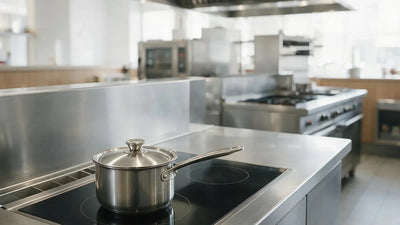
Cheaper equipment can be tempting, but efficiency drives profitability over the life of the unit. Look for high energy-star ratings, advanced thermal insulation that cuts warm-up time, and induction technology. Commercial induction cooktops only generate heat when a pan is present, giving instant control and much higher efficiency than traditional gas or electric.
🔧 Pro tip, insulation pays back
Better thermal insulation does double duty: it shortens warm-up time and keeps ambient kitchen temperature down, which reduces the load on your extraction and cooling.
4. Material quality and build
Commercial kitchens are high-stress environments, so durability is paramount. Select equipment made from high-grade stainless steel, typically Type 304, for corrosion resistance, easy cleaning and hygiene. Then decide whether you need a heavy-duty unit (12-plus hours a day, very high volume) or a medium-duty one (moderate cafe or restaurant volume), because that difference drives both cost and lifespan.
Essential types of commercial cooking equipment
Each category plays a specific role in getting the dish right. Atlantic Equipment carries a wide range across every commercial need, from cooking equipment through to refrigeration.
Commercial ovens
Ovens are the core of many production kitchens, and the type you choose follows your primary function:
- Convection ovens: fans circulate heat evenly for baking, quick roasting and high-volume work
- Combi ovens: combine dry convection and moist steam, the most versatile choice for kitchens that need flexibility
- Deck ovens: intense, stable bottom heat for bread, pizza and similar products
Browse combi ovens and convection ovens to compare options.
Commercial ranges and cooktops
Ranges integrate top burners with an oven beneath, an efficient all-in-one for limited space. Gas ranges offer instant heat control and remain a chef favourite; electric ranges hold low, gentle heat well; and induction cooktops are the most efficient, fast and safe option, heating cookware directly through magnetic fields.
High-capacity deep fryers
For fish and chips, chicken wings or doughnuts, fryers need a high recovery rate to reheat oil quickly between batches and keep food quality consistent. Gas fryers are popular for extremely fast temperature recovery; electric fryers suit lower-volume cafes or supplementary use; and pressure fryers cook fried chicken while retaining moisture in the product.
Grills, griddles and charbroilers
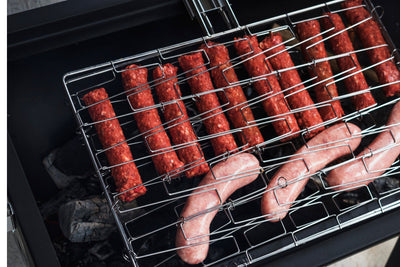
These direct-heat appliances deliver caramelisation and distinctive flavour. Commercial griddles use a flat surface for high volumes of pancakes, eggs, burgers and vegetables at once. Charbroilers use lava rocks or infrared radiation to impart a smoky, flame-kissed flavour. Salamanders finish dishes by melting cheese, browning a top crust or holding food warm. See the full chargrill range and griddles.
Total cost of ownership (TCO)
The purchasing decision goes well beyond the initial price tag. Calculate the total cost of ownership across the life of the unit:
ℹ️ The TCO formula
TCO = Initial purchase price + Installation costs + Lifetime energy costs + Maintenance costs − Salvage value. Equipment with low energy and maintenance costs often wins even at a higher purchase price, which is the view most industry experts take.
Maintenance to maximise equipment lifespan
Even the best equipment needs routine care to hold peak performance and avoid costly downtime:
- Daily cleaning: clear grease and spills daily, since baked-on carbon reduces heat transfer; routinely filter fryer oil to extend oil life and frying quality
- Scheduled professional servicing: book technician inspections at least twice a year to prevent major breakdowns and verify safety components
- Staff training: misuse is a leading cause of failure, so make sure staff understand standard operating procedures and the workload limits of each appliance
If you are specifying a kitchen from scratch, our companion guide on choosing the right equipment for your restaurant takes a step-by-step, station-by-station approach.
Frequently Asked Questions
Heavy-duty equipment uses thicker steel and superior components designed to run continuously for 12 or more hours a day in high-volume settings such as large hotels or production kitchens. Medium-duty suits operations running 6 to 8 hours daily, like small cafes. Heavy-duty units last longer and stay reliable under demanding use.
It matters a great deal. A higher-rated unit may cost more upfront but consumes less gas or electricity over its lifetime, which leads to meaningful long-term savings on utility bills and a better return on investment.
Gas offers instant, powerful heat and fast temperature changes that many chefs prefer for stovetop work. Electric ranges, particularly induction, offer superior energy efficiency and precise control at lower temperatures. The right choice often depends on utility availability and cooking preference.
Purchase price is only one part of what equipment costs you. Installation, lifetime energy use, maintenance and resale value all add up. A unit with a higher price but lower energy and maintenance costs frequently works out cheaper across its working life.