


Combi Ovens
Compare commercial combi ovens by tray capacity, pan format and installation requirements. Atlantic Equipment’s range includes compact countertop models and larger trolley-loading ovens, with GN 1/1 and GN 2/1 formats among the listed options.
Start with the number of trays you need to cook at once, then check tray spacing, external dimensions and door clearance. Confirm the selected model’s electrical or gas supply, water treatment, drainage and ventilation requirements before ordering. Tray count alone does not tell you how an oven will fit your menu or kitchen.
Browse the models below, or compare other commercial oven types if you are still choosing your cooking setup.
-
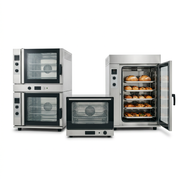
 Convotherm 10 Tray GN 1/1 Electric Combi-Steamer Oven CMINIPRO10.10
$25,344.00From:$18,754.60 Rent $238.03 + GST/week
Couldn't load pickup availability
-
 Atosa Electric Combi Oven For Gastronomy Use: 10 X Gn 2/1 Trays EPC-1021E3
$17,300.00From:$11,245.00 Rent $142.72 + GST/week
Couldn't load pickup availability


WE’RE HERE TO ANSWER
Combi Ovens FAQs
What’s the difference between boiler and boilerless combi ovens?
Boiler combi ovens use a built-in steam generator, ideal for kitchens requiring high volumes of steam for extended periods—excellent for bulk steaming and baking. Boilerless models use spray injection to produce steam, making them more energy and water-efficient with lower maintenance needs. They suit operations with lighter steam requirements or where water quality may be an issue.
Do I need a water connection and ventilation hood for a combi oven?
Yes, all combi ovens require a cold water connection for steam generation and automated cleaning. In most commercial kitchens, a Type 1 ventilation hood is also needed to comply with safety and hygiene regulations, particularly when the oven is used for roasting or grilling, which produces grease-laden vapors.
How should I maintain a combi oven to ensure long-term performance?
Daily maintenance includes wiping down the interior and running the auto-clean cycle. Weekly tasks often include checking door gaskets and inspecting drain lines. Use recommended detergents and descale agents regularly. It's crucial to replace water filters at defined intervals to prevent limescale build-up, especially in high-mineral areas.
How many GN pans fit in a standard combi oven?
A standard combi oven is typically sized by GN 1/1 or GN 2/1 pans. A compact model might hold 6 GN 1/1 pans, while full-size units can carry 10, 20, or even more GN pans. The spacing between shelves allows flexibility for cooking different heights of product simultaneously.
Why choose a combi oven over a traditional convection oven?
Combi ovens offer steam + convection modes, delivering higher cooking yields, shorter cook times, and better nutrient retention. Unlike convection ovens, they can proof, steam, bake, roast, and regenerate food—all in one unit—reducing the need for separate appliances and labor.