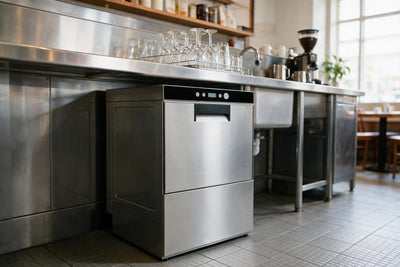
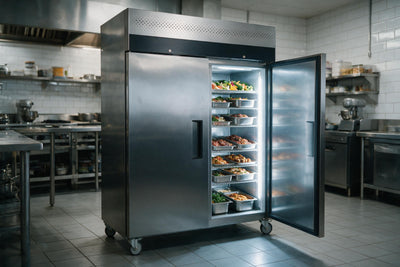
The best commercial refrigeration for a restaurant or café is the combination of units that matches how your kitchen actually works: enough chilled and frozen capacity for your peak, the right formats for each prep station, and energy efficiency and temperature stability that keep food safe and costs down. Most venues run more than one type, an upright or two for bulk storage, undercounter and prep fridges at the line, and display units front of house. This guide shows you how to put that mix together.
📋 What this guide covers
- How to read your kitchen's daily storage needs
- The main refrigeration types and where each fits
- Sizing and capacity by venue type
- Energy efficiency and temperature stability features that matter
- Build quality, maintenance and food safety basics
Start with how your kitchen operates
Before choosing any unit, get clear on your daily workflow. A few honest questions point you to the right setup:
- How much food needs to be stored during peak hours?
- Do you need quick-access storage, bulk storage, or both?
- Do specific prep stations need dedicated refrigeration?
- How much floor space does your layout allow?
Answering these first means the refrigeration you buy supports the workflow instead of slowing it down.
The main types of commercial refrigeration
Most commercial kitchens combine several formats to cover different storage jobs. These are the categories you will choose between.
Upright (vertical) refrigerators and freezers
Ideal for high-capacity storage where floor space is limited. They give you a lot of chilled or frozen volume in a small footprint.
Undercounter refrigerators
Built to fit beneath workbenches, perfect for small kitchens or for keeping product within reach at a busy prep station.
Prep fridges (pizza, sandwich and salad counters)
These combine refrigeration with a prep surface and ingredient wells, allowing faster, more efficient assembly during service.
Display fridges and grab-and-go coolers
Used front of house for beverages, desserts or packaged items, where presentation and easy customer access matter.
Chest freezers
Best for large-volume frozen storage and bulk stock holding. For dedicated frozen needs it is worth comparing options across our commercial freezers range.
Choosing the right size and storage capacity
Correct sizing keeps temperatures stable and energy use sensible. Units that are too small lead to spoilage, while oversized units waste energy and floor space. Weigh up the number of staff working the kitchen, your delivery frequency, the ratio of chilled to frozen storage you need, and your volume during peak hours.
| Business type | Daily volume | Recommended capacity |
|---|---|---|
| Small café | Low to medium | 1 to 2 undercounter fridges |
| Mid-size restaurant | Medium to high | 1 upright plus 1 prep fridge |
| Large catering service | High | Multiple uprights plus a cold room |
Prioritise energy efficiency
Refrigeration runs around the clock, so efficiency has a real effect on long-term operating costs. The features that make the difference include:
- Energy Star rating: a high rating signals lower running costs
- Efficient compressors: the heart of energy performance
- LED internal lighting: less heat and less power draw
- Auto-defrost: maintains efficiency without manual intervention
- Eco-friendly refrigerants: better for compliance and the environment
- Thick insulated walls and doors: hold temperature with less effort
Better efficiency saves money and helps cooling stay stable through a long service.
🔧 Pro tip, separate chilled and frozen demand
Work out your chilled and frozen needs as two separate numbers before you shop. Many venues over-buy freezer space and run short on chilled prep storage, which is where most service bottlenecks actually happen.
Temperature stability and food safety
Stable temperatures are critical for keeping food safe and preventing spoilage. Look for digital temperature displays, automatic alarms for fluctuations, self-closing doors, reinforced door seals and consistent airflow. Reliable control also keeps you aligned with the FSANZ Food Standards Code, which sets the temperature requirements Australian venues must meet.
ℹ️ Target temperatures
Aim for 1°C to 4°C in commercial refrigerators and -18°C to -22°C in freezers. Digital displays and alarms make it far easier to hold these ranges and catch problems early.
Build quality and long-term durability
Commercial kitchens are hard on equipment, so durability pays for itself. Favour stainless steel interiors and exteriors, heavy-duty hinges and handles, adjustable sturdy shelving and scratch-resistant surfaces. Higher-quality materials reduce repairs and extend the working life of the unit.
Easy maintenance and cleaning
Units that are simple to clean keep hygiene high and downtime low. Removable door gaskets, an easy-access condenser, smooth interior surfaces, adjustable shelves and automatic defrost all help. Routine maintenance also keeps the unit efficient and heads off unexpected breakdowns.
⚠️ Don't neglect the condenser
A clogged condenser is one of the most common causes of poor cooling and compressor failure. Clean it at least every three months, more often in dusty or high-grease environments.
Brand reputation and after-sales support
A reputable brand brings reliable performance, better parts availability and useful support when you need it. Suppliers that specialise in commercial kitchen equipment can steer you towards models proven for durability, safety and long-term reliability. If you are fitting out the whole kitchen, it helps to plan refrigeration alongside cooking gear such as benchtop griddles and your ice supply. Our guide to choosing a commercial ice machine covers the cold side that sits beside your fridges.
Frequently Asked Questions
Typically 8 to 12 years, depending on build quality, how often it is maintained and how intensively it is used. Keeping the condenser clean and seals intact extends that life.
It is strongly recommended. Stainless steel is more hygienic, easier to clean and far more durable than plastic interiors, which is why it is the standard in professional kitchens.
Aim for 1°C to 4°C in a refrigerator and -18°C to -22°C in a freezer. Holding these ranges keeps food safe and supports compliance with the FSANZ Food Standards Code.
Yes. Energy Star units can use 10 to 40 percent less energy than non-rated equivalents, which adds up over equipment that runs continuously for years.
At least every three months to maintain performance and protect the compressor. Clean more frequently in dusty or grease-heavy kitchens.