The right pan for a recipe comes down to two things: how the pan handles heat and the shape it gives you to work in. Use a non-stick skillet for eggs and pancakes, cast iron or stainless steel for searing meat, a wok for high-heat stir-frying, and a heavy-bottomed saucepan for sauces and grains. Match those properties to the dish and you get even cooking, better flavour and far less burning or sticking.
📋 What this guide covers
- Why pan choice changes how a dish turns out
- The main pan types and what each one does best
- How pan material affects heat, durability and care
- A quick reference for matching pans to common recipes
Why choosing the right pan matters
The pan you reach for shapes the result as much as the ingredients do. Using the wrong one causes burning, uneven cooking, or flavours that never quite develop. For stir-frying, a pan that holds high, even heat keeps vegetables crisp instead of stewed. For soups and sauces, a deep pan with a wide base lets you stir thoroughly and cook evenly.
Heat behaviour is the deciding factor. Some pans spread heat gently and forgive a wandering cook, while others run hot and fast and reward attention. Knowing which is which lets you pick with confidence.
Understand the different types of pans
Each pan shape exists for a reason. Here is what they do and where they shine.
Frying pans and skillets
Frying pans are the workhorses of any kitchen, ideal for sautéing, frying and browning. They cook quickly and spread heat evenly. Non-stick versions suit delicate foods like eggs and pancakes and make cleanup easy, while stainless steel skillets sear meat far better, delivering the rich flavour and crisp crust a non-stick surface cannot.
Saucepans
Tall sides make saucepans the right tool for simmering sauces, cooking grains and boiling small portions. The design contains liquid and keeps cooking even. A heavy-bottomed saucepan prevents scorching and distributes heat steadily, which matters whether you are reducing a delicate sauce or cooking rice.
Sauté pans
Sauté pans have straight sides and a wide base, so you can toss ingredients without spilling and cook larger portions evenly. They handle simmering and reducing well, and the extra room makes them excellent for pan-frying when you need to move food around.
Chinese woks
Woks are among the most versatile pans you can own, built for stir-frying, steaming and deep-frying. Their high, sloping sides make tossing quick and even. Carbon steel woks are the preferred choice because they hold heat well and develop a natural non-stick seasoning over time, giving you both durability and authentic results.
Cast iron skillets
Cast iron retains heat exceptionally well, which makes it perfect for frying, searing and baking. That heat retention gives you even cooking and a deep, browned finish. Cast iron needs regular seasoning to keep its non-stick surface and prevent rust, but in return it adds a depth of flavour that is hard to match.
Specialty pans
Grill pans, roasting pans and steamer inserts each handle a specific job. For indoor grilling, a dedicated grill pan or a commercial char grill brings the bar-marked, smoky finish that ordinary pans cannot.
Recommended pans for common recipes
| Recipe type | Recommended pan | Tip |
|---|---|---|
| Eggs and pancakes | Non-stick skillet | Low heat, gentle flipping |
| Steaks and meats | Cast iron or stainless steel | High heat, preheat the pan |
| Stir-fried veggies | Chinese wok | High heat, quick tossing |
| Sauces and soups | Saucepan | Thick base, simmer slowly |
| Oven roasts | Cast iron or roasting pan | Preheat oven, oil lightly |
Consider the material
A pan's material drives heat distribution, durability and how much care it needs. The common options each suit different jobs.
- Stainless steel: Durable, non-reactive and ideal for searing and browning.
- Non-stick: Easy to clean and best for eggs, pancakes and delicate foods.
- Cast iron: Excellent heat retention, great for frying, baking and searing.
- Aluminium: Lightweight and heats quickly, often coated for non-stick use.
- Copper: Superior heat conduction, usually lined with stainless steel for safety.
🔧 Pro tip, preheat before you cook
Most sticking and uneven browning comes from a cold pan. Let stainless steel or cast iron come up to temperature before the food goes in, and the surface releases more cleanly while building a better sear.
Tips for selecting the right pan
- Size matters: Choose a pan that fits the recipe and the quantity you cook.
- Check the weight: Heavier pans usually mean better heat retention.
- Handles: Make sure they are sturdy and oven-safe if the recipe needs it.
- Maintenance: Decide between a low-maintenance non-stick pan or a cast iron that rewards seasoning.
- Versatility: If space is tight, pick pans that cover several jobs.
ℹ️ Pair pans with the right storage
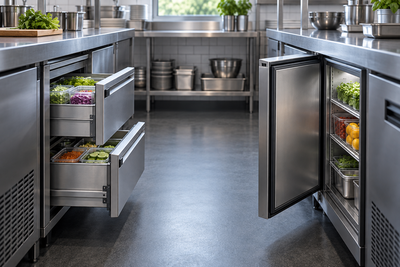
Good cookware works best with ingredients kept in top condition. Storing produce and proteins in well-maintained commercial refrigeration before cooking helps preserve freshness and quality right up to service.
For commercial kitchens building a cookware kit, browse the commercial pots and pans range and the wider cookware and bakeware collection. Venues doing serious wok work should also look at dedicated wok burners for the high heat stir-frying demands.
Frequently Asked Questions
It is not recommended. Non-stick coatings can degrade at the high temperatures searing needs. Use cast iron or stainless steel for the best crust and flavour.
Use a wok for quick stir-fries and tossing ingredients over high heat. A skillet, with its flat base, is better for frying, browning and sautéing.
A heavier pan holds and spreads heat more steadily, so it resists temperature drops when food goes in and gives more even browning with fewer hot spots.
No. Seasoning applies to cast iron and carbon steel. Stainless steel is non-reactive and needs no seasoning, though preheating it properly helps food release cleanly.