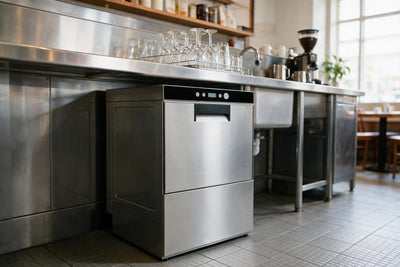
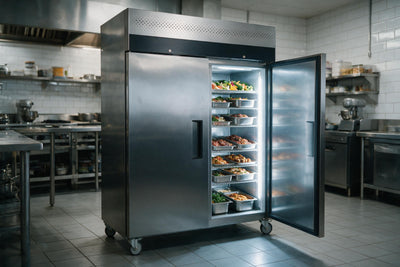
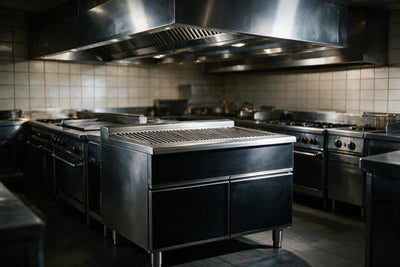
Oven and wall shelves are durable, wall-mounted stainless steel storage units that keep trays, pans, cookware and tools organised near the cookline and prep areas. In a commercial kitchen they do more than tidy up the bench: they speed up access during service, free up working surfaces, and help maintain the hygiene standards Australian venues are held to. Fitted well, they turn cluttered cooking zones into structured, efficient stations.
📋 What this guide covers
- Why oven and wall shelves matter in commercial kitchens
- How they cope with heat, moisture and heavy daily use
- The main types and how to choose between them
- Installation, maintenance and where they fit best
Why oven shelves are essential in commercial kitchens
Commercial kitchens work under constant pressure, especially through peak service. Without proper shelving, benches clutter, tools go missing, and workflow stalls at the worst possible moment. Oven shelves provide structured storage that supports both cooking and preparation.
Keeping trays, pans and accessories organised near the cooking equipment lets staff work faster and more safely. That matters most in high-volume kitchens, where time, consistency and safety standards all have to hold at once.
Key advantages include:
- Better organisation: tidy storage around ovens and cooklines
- Faster access: trays and cookware stay within reach
- Less clutter: workbenches stay clear for prep
- Improved safety: fewer obstacles and smoother workflow
Shelves built for high-temperature environments
Commercial oven shelves are engineered to withstand heat, moisture and frequent use. Built from stainless steel or heavy-duty materials, they keep their strength and stability even in demanding cooking zones.
They are commonly positioned near ovens, combi ovens and baking stations, so chefs can load, unload and store trays efficiently. That durable construction is what makes them a reliable, long-term fixture rather than something you replace every couple of years.
Paired with mobile storage for tray transport, fixed shelving streamlines the whole back of house. Our guide on mobile gastronorm rack trolleys covers how moving racks complement static shelving.
Key benefits of oven and wall shelves
Durable storage
Designed for commercial use, oven shelves support heavy trays, cookware and accessories without bending or wobbling. That stability keeps daily operation safe and reliable.
Improved cooking organisation
Keeping essential tools within arm's reach helps chefs hold their rhythm and consistency through service, which counts most in fast-paced environments.
Better use of space
Wall-mounted shelves free up bench space, letting kitchens make the most of both vertical and horizontal storage.
Stronger hygiene
Clear work surfaces are easier to clean and sanitise. Proper shelving helps kitchens meet food safety and hygiene standards.
🔧 Pro tip, zone your shelving
Reserve the shelving closest to the oven for trays and pans you use every service, and keep occasional-use items further along. Grouping by frequency cuts the reaching and shuffling that slows a line down at peak.
Common types of oven and wall shelves
Wall-mounted shelves
Ideal for storing trays, pans and cookware near cooking stations while keeping benches clear.
Heavy-duty shelves
Built for higher load capacities, suited to bulk cookware and frequently used equipment.
Adjustable wall shelving systems
Offer the flexibility to change shelf height as kitchen needs and equipment sizes change.
Between them, these options let kitchens tailor the layout while keeping a professional, organised setup.
| Shelf type | Best for | Consideration |
|---|---|---|
| Wall-mounted | ✓ Trays and pans near the cookline | Needs solid wall and fixings |
| Heavy-duty | Bulk cookware and equipment | Higher fixing requirements |
| Adjustable | Changing equipment sizes | Recheck levels after adjusting |
Choosing the right oven shelves for your kitchen
The right choice comes down to a handful of operational factors:
- Load capacity: must support commercial cookware and trays
- Material: stainless steel is preferred for durability and hygiene
- Placement: near ovens, prep areas or service lines
- Mounting type: fixed or adjustable, depending on your layout
In many kitchens, wall shelving works best alongside other storage. Heavy-duty options like pipe wall shelves often sit beside oven shelves to give a balanced mix of robust and flexible storage. Browse the full range in our wall shelves and over and undershelves collections.
Ideal applications
Oven and wall shelving systems are widely used in:
- Restaurants and cafés
- Bakeries and pastry kitchens
- Hotels and resorts
- Catering and event kitchens
- Schools, hospitals and institutional kitchens
Across all of these, reliable shelving supports faster service, safer operation and better organisation.
Installation and maintenance
Proper installation is critical for safety and longevity. Shelves should be securely mounted to walls with appropriate fixings and set at ergonomic heights for staff.
- Clean regularly: use food-safe products
- Inspect mounts: check brackets and fixings periodically
- Respect capacity: avoid loads beyond the rated limit
With correct care, commercial oven shelves deliver years of dependable performance.
ℹ️ Why commercial-grade is worth it
Domestic or low-quality shelving tends to fail under professional demands. Purpose-built commercial shelving holds organised cooking zones, cuts downtime caused by clutter, and supports consistent workflows, which is where it pays for itself.
Frequently Asked Questions
They store trays, pans and cookware near ovens, improving organisation and cooking efficiency on a busy line.
Yes. When made from heat-resistant materials and properly installed, they are safe for commercial kitchen use near cooking equipment.
Stainless steel is strongly recommended for its durability, hygiene and resistance to heat and moisture in cooking zones.
Many commercial wall shelving systems offer adjustable heights, so you can adapt them to different equipment and tray sizes.
Yes. Wall-mounted shelves are ideal for maximising space in compact kitchens where bench area is limited.