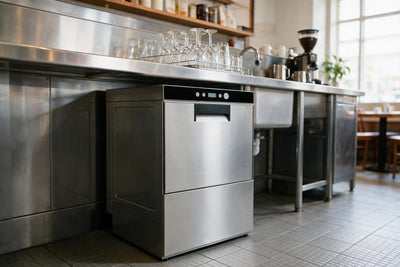
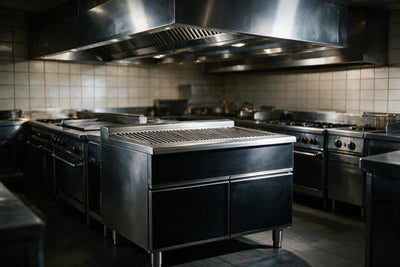
A splashback bench is a commercial stainless steel work bench with a raised panel along the back edge. That panel stops water, food debris, and cleaning chemicals from hitting the wall behind it, which protects the wall, keeps the area more hygienic, and cuts down cleaning time. It is one of the simplest ways to keep a wet or high-use kitchen zone clean, and it is why splashback benches are standard fit-out in dishwashing, prep, and cleaning areas across restaurants, cafés, hotels, and catering kitchens.
Unlike a flat bench, the integrated back panel contains mess at the source instead of letting it spread. The result is a tidier workstation, less wall maintenance, and a kitchen that holds up better to fast-paced service.
📋 What this guide covers
- What a splashback bench is and where it belongs in a kitchen
- The hygiene, durability, and workflow benefits it delivers
- How splashback benches compare to flat benches
- How to choose the right size, splashback height, and material
- Installation and maintenance tips for a long service life
What is a splashback bench?
A splashback bench is a commercial stainless steel bench with a vertical raised panel at the rear of the work surface. That panel is designed to stop water, food debris, and cleaning chemicals from splashing onto walls during washing, preparation, or cleaning tasks.
Because the panel is part of the bench, it gives walls an added layer of protection while keeping the work area more hygienic. These benches are usually installed against walls in high-use zones such as dishwashing stations, prep areas, and cleaning sections.
Why splashback benches are essential in commercial kitchens
Commercial kitchens run under strict hygiene rules and fast-paced conditions, so every piece of equipment has to support cleanliness, safety, and efficiency. A splashback bench earns its place by:
- Protecting walls from water and residue that would otherwise cause damage over time
- Reducing cleaning time around workstations
- Supporting food safety compliance by containing spills
- Improving staff efficiency during repetitive washing and prep tasks
By controlling splashes and spills at the source, kitchens stay cleaner and avoid unnecessary maintenance down the track.
Key benefits of using a splashback bench
Improved hygiene and wall protection
The raised panel acts as a barrier, stopping moisture, grease, and food waste from spreading beyond the bench. That keeps walls cleaner and reduces the risk of bacteria building up in hard-to-reach spots.
Durable stainless steel construction
Most commercial splashback benches are made from high-grade stainless steel, which resists corrosion, heat, and heavy daily use. That makes them suitable for the most demanding kitchen environments.
Easier cleaning and maintenance
Smooth surfaces and fewer gaps mean splashback benches wipe down and sanitise quickly. In a busy kitchen where time-efficient cleaning matters, that is a real advantage.
Better workflow efficiency
By containing mess within the work area, staff can focus on the task instead of constantly cleaning surrounding surfaces. That lifts productivity during peak service.
🔧 Pro tip, add a sink cover for dual-purpose space
Pair a splashback bench near your sink with a removable sink cover, and the bench surface doubles as prep space when washing is not in progress. It is a low-cost way to claw back work area in a tight kitchen. See our guide to sink bowl covers for how they work.
Common applications of a splashback bench
Splashback benches are versatile and turn up across a wide range of foodservice settings.
Dishwashing and cleaning areas
They are commonly installed near sinks and dishwashers, where splashing is unavoidable. The splashback keeps walls dry and hygienic.
Food preparation zones
In prep areas, they provide a clean, contained surface for washing ingredients, trimming produce, or handling raw food.
Catering and hospitality kitchens
High-volume kitchens benefit from the durability and the ability to support continuous workflows without constant wall cleaning.
How to choose the right splashback bench
The right bench depends on your kitchen layout, workload, and hygiene requirements. Weigh up these factors.
- Bench size and layout: Choose a length that fits your space while letting staff move freely.
- Splashback height: Taller splashbacks give better wall protection, which matters most in wet or high-use areas.
- Material quality: Commercial-grade stainless steel is recommended for durability, hygiene, and easy cleaning.
- Compatibility: Make sure the bench integrates well with your sinks, storage units, and surrounding workstations.
You can browse the workbenches with splashback range to compare sizes and configurations.
Splashback bench versus flat benches
Flat benches are fine for dry prep, but splashback benches add protection in wet or messy areas. Here is how they compare.
| Feature | Flat bench | Splashback bench |
|---|---|---|
| Wall protection | ✗ None | ✓ Raised rear panel |
| Best environment | Dry prep areas | Wet and high-use areas |
| Suited to | Light prep tasks | Washing, cleaning, messy prep |
| Hygiene compliance | Adequate | ✓ Stronger support |
For most commercial kitchens, splashback benches offer greater long-term value thanks to their versatility and protective design. Where you only need an open prep surface, a standard work bench still does the job.
Hygiene standards and compliance
Foodservice businesses must meet strict health and safety regulations. Splashback benches support compliance by reducing cross-contamination risks, making cleaning routines more effective, and helping kitchens pass food safety audits. Their design aligns with best practice for commercial kitchen hygiene under the Food Standards Code, which makes them a reliable choice for professional operators.
ℹ️ Pairing benches for a continuous run
To keep a consistent workspace, many kitchens pair splashback benches with matching stainless steel benches across their prep and cleaning zones. A continuous run of benching reduces gaps where debris collects and makes the whole line easier to clean.
Installation and maintenance tips
Proper installation and care keep a splashback bench performing for years.
- Install on level flooring for stability.
- Allow adequate clearance around plumbing connections.
- Clean surfaces daily to prevent grease build-up.
- Inspect joints and splashback seams regularly.
Routine maintenance extends the lifespan of stainless steel benches and keeps the kitchen running smoothly.
Frequently Asked Questions
It contains water, food residue, and spills while protecting walls in commercial kitchen work areas. They are most common in dishwashing, prep, and cleaning zones.
Yes. They are widely used for prep and cleaning tasks where hygiene is critical, and the raised panel keeps the surrounding wall clean during washing and trimming.
Yes. Stainless steel is durable, corrosion-resistant, and easy to clean, which makes it the standard choice for commercial benches that face constant moisture and heavy use.
Many models come in different sizes and configurations to suit various kitchen layouts, including different splashback heights and undershelf options.