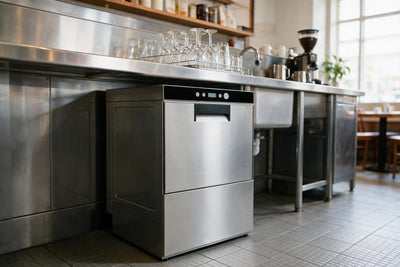
An under bench ice machine is a compact, built-in commercial ice maker that fits beneath a counter or workstation and produces a continuous supply of ice without taking up valuable floor space. For bars, cafes and small commercial kitchens, it delivers reliable output, hygienic operation and quiet running in a low-profile design that puts ice exactly where staff need it. Most models produce between 40 and 150 lbs of ice per day, with onboard storage of roughly 20 to 80 lbs.
📋 What this guide covers
- What an under bench ice machine is and where it suits
- The benefits that make compact units worth it
- Machine types, cooling methods and drainage options
- The features and capacities to check before buying
- Installation and maintenance tips, plus common questions
What is an under bench ice machine?
An under bench ice machine is a compact, built-in commercial ice maker designed to sit beneath counters or workstations. Despite the small footprint, it is engineered for continuous, dependable ice production, which suits beverage service, food presentation and general kitchen use. The low-profile design maximises floor space while keeping fresh ice within arm's reach.
These units are commonly used in:
- Bars and cocktail lounges
- Restaurant service stations
- Cafe beverage counters
- Hotel mini-bars and event spaces
- Small commercial kitchens
- Coffee shops and smoothie bars
Benefits of an under bench ice machine
- Space-saving efficiency: The compact, low-profile size fits neatly under counters without disrupting workflow.
- Continuous ice supply: Output is impressive for the size, so staff rarely run short during peak hours.
- Clean, hygienic operation: Most units include antimicrobial materials, sealed storage bins and easy-clean components to support food safety.
- Energy and water efficiency: Modern refrigeration keeps utility costs down.
- Quieter performance: Compared with larger machines, under-counter models run quietly, which helps front-of-house.
- Workflow convenience: Ice sits exactly where drinks are made, improving speed and ergonomics.
Depending on the unit, you can produce full cubes, half cubes, nugget or chewable ice, gourmet ice, and flake ice in some hybrid models.
Types of under bench ice machines
Self-contained ice machines
These include both the ice maker and the storage bin in one compact system. Best for bars, coffee shops and small restaurants.
Modular ice machines (small profile)
A small ice head is paired with a compact storage bin. Though less common in under bench setups, some low-height modular units qualify. Best for venues with higher volume but limited space.
Air-cooled under bench units
The most popular option thanks to energy efficiency and easy installation. They offer low operating cost and reliable cooling, but they need proper ventilation clearance.
Water-cooled under bench units
Used when space is extremely tight or ventilation is limited. They run quietly and stay compact, at the cost of higher water usage.
Drain pump vs gravity drain
Your plumbing layout decides the drainage type. Drain pump models allow flexible installation, while gravity drain units require direct floor drain placement.
Key features to look for
- Production capacity: Match daily demand. Typical under-counter units range from 40 to 150 lbs of ice per day.
- Storage bin size: Capacity usually runs between 20 and 80 lbs. Choose based on peak usage, not average volume.
- Ice shape compatibility: Full or half cubes for standard beverage service, nugget ice for cocktails, sodas and healthcare, gourmet ice for premium bars, and flake ice for seafood and displays.
- Dimensions and ventilation: Measure the space and confirm ventilation will not be obstructed.
- Energy efficiency: ENERGY STAR-rated models reduce long-term costs.
- Material and durability: Stainless steel exteriors and antimicrobial interior linings are preferred.
- Smart maintenance features: Self-cleaning cycles, removable air filters, corrosion-resistant components and LED bin lighting all help.
🔧 Pro tip, size for peak, not average
Ice demand is rarely steady. A Friday night or a hot summer lunch service can double your usual draw. Spec both the daily production and the bin capacity against your busiest realistic hour so the machine recovers between rushes instead of running empty.
Under bench vs full-size ice machines
| Feature | Under Bench Ice Machine | Large Commercial Ice Machine |
|---|---|---|
| Space requirement | ✓ Low | High |
| Production capacity | Moderate | ✓ High |
| Installation | ✓ Easy | More complex |
| Noise level | ✓ Quieter | Louder |
| Ideal use | Bars, cafes, small kitchens | Hotels, banquet halls, high-volume kitchens |
| Cost | ✓ Lower | Higher |
If your demand outgrows a compact unit, step up to a modular or remote-cooled system. Our large ice machines buying guide covers high-volume options, and you can compare models across the full ice machines range.
Who should use an under bench ice machine?
An under bench ice machine is ideal for:
- Cocktail bars with high drink turnover
- Coffee shops and smoothie stations
- Small restaurants with limited equipment space
- Hotel event bars and mobile bars
- Any business that needs immediate, localised ice production
Installation tips for best performance
- Allow 2 to 4 inches of ventilation space around the unit.
- Keep the area free of heat-producing appliances.
- Ensure proper drainage and a reliable water line connection.
- Use a water filter to improve ice clarity and extend equipment life.
- Schedule regular cleaning every 2 to 4 weeks depending on usage.
ℹ️ Filter your water from day one
A water filter does double duty. It improves ice clarity and taste, and it protects the machine from scale that shortens compressor life. In hard-water areas it is one of the cheapest ways to avoid premature breakdowns. Pair it with a dedicated storage bin if you need extra holding capacity.
Maintenance schedule
- Daily: Wipe surfaces, check ice level and confirm air vents are clear.
- Weekly: Wash the bin with warm water and check the air filter.
- Monthly: Run a self-cleaning cycle, inspect water lines and check for scale buildup.
- Quarterly: Descale and sanitise the interior, replace the water filter and inspect compressor components.
Frequently Asked Questions
Most models produce between 40 and 150 lbs per day, depending on size and intended use. Match the rating to your busiest service rather than your daily average.
Most units fit under standard 34 to 36 inch counters, but always check the exact dimensions and allow for ventilation clearance before installing.
Yes. You will need either a gravity drain or a drain pump model, depending on your setup. Gravity drains require a floor drain nearby, while pump models give you more placement flexibility.
Half cubes or nugget ice are the most popular choices, depending on drink style. Half cubes suit general beverage service, while nugget ice is favoured for cocktails and sodas.
With proper care, these machines typically last 7 to 10 years. Regular descaling, filter changes and ventilation upkeep make the biggest difference to lifespan.