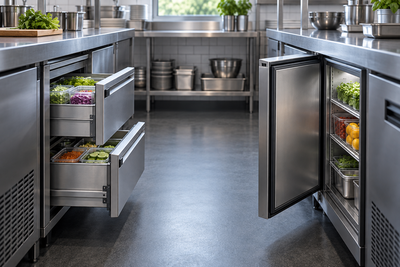
A gastronorm dish cassette is a standardised rack that holds GN-sized pans, trays and dishware so they can be stored, washed and moved through a commercial kitchen without damage or disorganisation. Because it follows the Gastronorm (GN) sizing system, the cassette drops straight into compatible benches, racks and trolleys, which is exactly why busy restaurants, hotels and catering kitchens rely on it to keep service moving.
📋 What this guide covers
- What a gastronorm dish cassette is and why GN sizing matters
- The main cassette types and materials, and where each fits
- How cassettes improve workflow and support food safety
- How to choose the right cassette for your kitchen
- Care and maintenance to extend its working life
What is a gastronorm dish cassette?
A gastronorm dish cassette is a structured holder built to organise and transport GN-sized dishes, pans or trays. It is dimensioned to the Gastronorm standard, so it stays compatible across the equipment you already run, from drawers and shelving through to mobile racks.
You will find cassettes used throughout foodservice, including:
- Commercial kitchens: keeping prep and service dishware ordered
- Catering and banquet operations: moving large volumes between zones
- Food production facilities: standardising container handling
- Institutional kitchens: schools, hospitals and aged care
- Back-of-house storage: tidy holding between washes
Why dish cassettes matter in a commercial kitchen
Professional kitchens run on speed, consistency and hygiene. A cassette supports all three by giving dishware a fixed home as it cycles through prep, wash and service. That structure pays off most during peak periods, when sorting time and breakages are what slow a brigade down.
- Organised storage: GN containers stay grouped and easy to find
- Safer transport: dishes move between zones without sliding or stacking precariously
- Less breakage: reduced handling means fewer chipped or cracked items
- Consistent workflow: staff know where everything sits, every shift
🔧 Pro tip, match the cassette to your busiest pan size
Most kitchens lean heavily on one or two GN sizes (often 1/1 and 1/2). Spec cassettes around those first so the racks you reach for during service are always the right fit.
Types of gastronorm dish cassette
Different services call for different cassette builds. The four common formats cover most needs:
- Standard dish cassettes: general storage and transport of GN dishes and trays
- Open-side dish cassettes: quicker access and better airflow for drying
- Reinforced dish cassettes: built for heavier loads and high-volume sites
- Stackable dish cassettes: make the most of vertical space in tight kitchens
Material options and construction
Cassettes are made from materials chosen for durability and hygiene, so the surface holds up to constant washing while staying easy to sanitise.
- Food-grade plastic or composite: lightweight, corrosion-resistant and easy to clean
- Reinforced frames: added strength for frequent, heavy use
- Smooth interior surfaces: discourage bacteria build-up and simplify sanitation
Match the material to your workload and cleaning routine. A high-turnover wash area will get more life from a reinforced build than a lightweight one.
Standard vs reinforced cassettes
| Feature | Standard cassette | Reinforced cassette |
|---|---|---|
| Load capacity | Medium | ✓ High |
| Best use | General dish handling | High-volume kitchens |
| Stackability | Yes | Yes |
| Cleaning ease | Easy | Easy |
| Durability | High | ✓ Very high |
How cassettes improve kitchen workflow
In a fast kitchen, organisation translates directly into service speed. Cassettes help by cutting the time spent sorting dishes, keeping clean and used items clearly separated, and simplifying transport between prep, wash and service. The result is fewer handling errors and a smoother flow through the pass.
They also pair well with flexible prep gear. Where layouts change between services, adding folding tables for flexible prep and catering alongside your cassette system lets a kitchen reconfigure quickly without losing its order.
Hygiene and food safety advantages
Hygiene is non-negotiable in foodservice, and the Australia New Zealand Food Standards Code (Standard 3.2.2) requires food contact surfaces and equipment to be kept clean and sanitary. Cassettes support that by:
- Keeping dishes off unsanitary floors and surfaces
- Allowing efficient washing and drying workflows
- Supporting first-in, first-out (FIFO) handling
- Reducing the chance of cross-contamination between clean and soiled items
ℹ️ Standardised design makes inspections easier
Because every cassette is the same size and shape, cleaning and inspection routines become repeatable. That consistency is exactly what makes a kitchen audit-ready.
How to choose the right dish cassette
A few practical questions narrow the choice quickly:
- GN size compatibility: match the cassette to the containers you use most
- Load requirements: high-volume sites usually need reinforced options
- Storage space: stackable designs help where floor space is tight
- Cleaning frequency: smooth, food-grade materials clean fastest
- Workflow integration: consider how the cassette sits within your existing wash and storage systems
Care and maintenance
A little routine care keeps cassettes performing and hygienic for years:
- Avoid loading beyond the rated capacity
- Clean regularly with food-safe detergents
- Inspect for cracks or damage and retire anything compromised
- Store in dry, well-ventilated areas
Complementary GN storage solutions
Cassettes work best as part of a wider GN system. For drawer-based holding, our guide to gastronorm drawers covers structured storage for containers and accessories, while the stainless steel drawers range gives you the hardware to match. For moving stock between zones, gastronorm rack trolleys pair naturally with cassettes. Combining cassettes, drawers and trolleys around a consistent GN footprint is what turns a collection of equipment into a genuinely streamlined kitchen.
Frequently Asked Questions
It organises, stores and transports GN-sized dishes and containers, giving dishware a fixed home as it moves through prep, washing and service.
Yes, provided the cassette is built to the Gastronorm standard. GN sizing is what makes drawers, racks and trolleys interchangeable.
Most are made from smooth, food-grade materials that wipe down quickly and stand up to repeated sanitising.
Many designs are stackable, which helps save floor space in kitchens where storage is tight.
Yes. Their standardised, transportable design suits off-site events and banquet service where dishware has to move safely between venues.