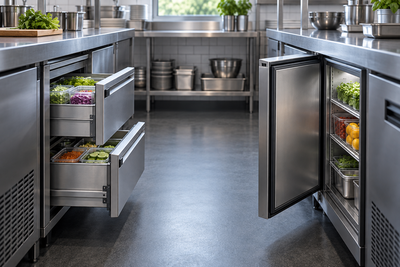
To choose the right stainless steel benches and shelving for a commercial kitchen, match the steel grade to the zone (304 for wet and food-prep areas, 430 for dry storage and light use), confirm the bench thickness and load rating suit the work, and size each piece to your actual layout. Do that and you get a hygienic, durable, compliant kitchen that works with your team rather than against it.
Benches and shelving are the backbone of an organised commercial kitchen, whether you run a restaurant, café, bakery, catering business or large hospitality venue. The right stainless steel setup lifts productivity, improves safety and keeps you aligned with foodservice standards. This guide covers grades, bench and shelving types, and the practical checks that matter before you buy.
📋 What this guide covers
- Why stainless steel is the kitchen standard
- The main bench and shelving types
- 304 vs 430 grade and where each belongs
- What to check before you buy
Why stainless steel is the preferred choice
Stainless steel has long been the standard in foodservice, and for good reason. Its hygiene, durability and corrosion resistance are hard to beat in a busy kitchen.
- Hygienic and easy to clean: The non-porous surface resists bacterial growth and supports food safety compliance.
- Highly durable: Withstands impacts, heat and intensive daily use.
- Corrosion resistant: Essential for wet areas such as dishwashing sections.
- Maximises storage: Helps organise tools, dry goods, stock and smallwares.
- Heavy-duty compatible: Suited to high-volume commercial kitchens.
Types of stainless steel benches
The right bench design improves both workflow and safety. Most kitchens use a mix of the following.
- Work benches: For food preparation, cutting, assembling dishes and general tasks.
- Sink benches: For washing produce, utensils, cookware and smallwares, often with splashbacks and multiple bowl configurations.
- Corner benches: Make efficient use of corner spaces in tight layouts.
- Splashback benches: Protect walls from spills and moisture, ideal for wet prep or cleaning areas.
- Undershelf benches: Add storage beneath the work surface for containers, utensils and small appliances.
Benches come in various lengths, depths and styles to suit any layout. If your wash-up area needs attention, the sink benches and sinks range covers the common bowl configurations.
Types of stainless steel shelving
Good shelving and racking improves storage efficiency, keeps essentials accessible and tidies the whole kitchen.
- Wall shelving: Suits ingredients, utensils and frequently used tools.
- Heavy-duty storage shelving: Ideal for stockrooms holding bulk items and large equipment.
- Undershelves and overshelves: Maximise vertical space above or below existing benches and appliances.
- Tiered shelving units: Great for kitchens with limited floor space, supporting vertical storage and easy inventory visibility.
For open storage that frees up floor space, compare freestanding shelving and wire shelving options.
304 vs 430 grade: which to choose
The single most important spec is the steel grade, because it determines how well each piece holds up in its zone. The two grades you will see are 304 and 430.
| Stainless steel grade | Features | Best uses |
|---|---|---|
| 304 grade | High corrosion resistance, premium quality, long lifespan | ✓ Wet areas, food prep zones, sink benches |
| 430 grade | More affordable, moderate resistance | Dry storage, light prep areas, general shelving |
🔧 Pro tip, spend where it gets wet
Put 304 where water and food contact are constant, such as sink benches and prep tables, and save with 430 on dry-store shelving. Matching grade to zone gives you the best balance of longevity and budget.
What to check before you buy
Beyond grade, a handful of factors decide whether a bench or shelf actually suits the job.
- Stainless steel grade (304 vs 430): Choose based on wet or dry conditions.
- Bench thickness: Thicker material gives better support for heavy-duty tasks.
- Load-bearing capacity: Essential for shelves or benches supporting heavy appliances.
- Size and configuration: Measure your space to suit workflow and equipment placement.
- Mobility and assembly: Adjustable feet, modular parts or wheels add flexibility for changing layouts.
- Food safety compliance: Surfaces should meet commercial hygiene standards for safe food handling.
ℹ️ Where these solutions fit
Stainless benches and shelving suit restaurants, cafés and coffee shops, bakeries, catering facilities, hotels and resorts, bars and pubs, butcheries and food production facilities. Any kitchen that values durability and hygiene benefits from them.
Frequently Asked Questions
Grade 304 is best for food prep and wet areas thanks to its high corrosion resistance. Grade 430 suits dry storage and lighter use.
With proper care, high-quality stainless steel benches and shelving can last 10 to 20 years or more.
No. Clean regularly with a mild detergent and avoid abrasive cleaners to keep the surface bright and scratch-free.
Yes. Heavy-duty stainless steel shelving can support large quantities of stock, appliances and equipment, depending on the load rating.
To squeeze more out of a tight kitchen, read our guide on innovative storage solutions for commercial kitchens.