Consistently good BBQ in a restaurant comes from controlling three things every service: ingredient quality, equipment and cooking technique. Choose well-marbled cuts, run a reliable char grill with proper heat zones, and manage temperature and timing the same way each time. Lock those down with standard recipes and a maintenance routine, and you deliver the same standard of BBQ on a quiet Tuesday as you do on a Saturday night.
📋 What this guide covers
- The fundamentals behind reliably good BBQ
- Why equipment choice and upkeep drive consistency
- Selecting and standardising your ingredients
- Cooking techniques and food-safe storage that hold the line
Understanding the basics of perfect BBQ
Great BBQ starts with quality ingredients and the right cooking method. Fresh cuts with good texture, paired with sound grilling technique, do most of the work. Three fundamentals underpin every successful service.
- Ingredient selection: Choose cuts with balanced fat and muscle for juicy, flavourful results.
- Marinating: Season the meat for several hours so the flavour develops fully.
- Temperature control: Use the right heat to cook evenly without burning.
The role of proper equipment in BBQ
Consistency is built on reliable equipment. Quality gear improves cooking efficiency, repeatability and food safety, which is exactly what a busy kitchen needs.
Use commercial char grills for consistency
A reliable commercial char grill gives you even heat distribution and the smoky character that keeps customers coming back. Grills with adjustable heat zones let chefs cook different cuts at once without overcooking, so each piece comes off the grill at its best. That flexibility is what turns good results into consistent ones across a full service.
Maintain your equipment
Regular cleaning and maintenance extend the life of your grill and protect the flavour of your food. Grease and leftover seasoning that build up will taint the taste of later dishes and can create unpleasant odours in the kitchen. A clean grill is a consistent grill.
🔧 Pro tip, clean down every shift
Scrape and clean the grill at the end of each service while it is still warm. Removing residue before it carbonises keeps heat distribution even and stops yesterday's char tainting today's plates.
Selecting quality ingredients
Consistency begins with consistent raw materials. Fresh meats, spices and marinades make every dish taste exceptional, and sourcing locally where you can both improves flavour and strengthens supplier relationships.
- Meats: Choose cuts with good marbling, such as ribeye or pork shoulder, and cook them on a char grill for even heat and optimal flavour.
- Marinades and rubs: Experiment with flavours, but keep standard recipes so your signature taste stays the same every time.
- Vegetables and sides: Fresh vegetables prepared with care, like grilled corn or stir-fried greens cooked in a wok, complement your meat offerings.
BBQ cooking techniques compared
| Technique | Best for | Advantages | Drawbacks |
|---|---|---|---|
| Direct grilling | Thin meat cuts | Quick cooking, smoky flavour | High risk of burning |
| Indirect grilling | Large or bone-in cuts | Even cooking, juicy results | Longer cooking time |
| Smoking | Fatty, thick cuts | Unique flavour, tender texture | Requires special equipment |
Perfect cooking techniques
Even the best ingredients fall flat without sound technique. A few habits make the difference between an occasional great plate and a reliable kitchen.
Temperature control
Use a thermometer to check both the grill and the meat so your cooking temperatures stay accurate. This prevents under or overcooking and gives you the BBQ texture you want every time. Maintaining consistent heat across the grill is essential, and setting up separate zones for searing and slow cooking lets you build a flavourful crust while keeping the inside tender and juicy.
⚠️ Cook to safe internal temperatures
Flavour and food safety are not the same thing. Use a probe thermometer to confirm cuts reach safe internal temperatures, especially with poultry, mince and bone-in pieces, in line with FSANZ Food Standards Code requirements.
Timing is key
Do not overcrowd the grill, which drops the heat and causes uneven cooking. Leave enough space between pieces so every portion cooks properly. Rotate and flip strategically so each side gets even heat, preventing one side from burning while the centre stays raw.
Master the smoke
Wood chips and charcoal add flavour, but too much smoke overpowers the dish. Control the intensity so each bite stays balanced. Experiment with different woods, from mild fruit woods to stronger options like hickory, and adjust until you land on a signature smoky flavour worth returning for.
Kitchen organisation and storage
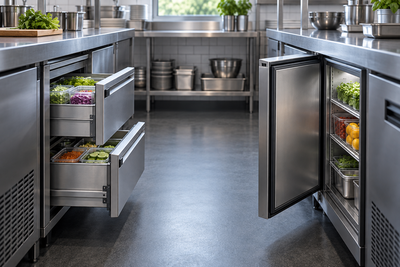
Reliable BBQ depends on safe, organised storage. Quality commercial refrigeration keeps meats and ingredients at safe temperatures, protecting both quality and food safety. Organise items for quick access and label them clearly to prevent cross-contamination, so your ingredients stay fresh and ready for service.
ℹ️ Consistency is a system, not a knack
The venues that nail BBQ every night standardise everything they can: recipes, portion sizes, grill zones and clean-down routines. Documented processes mean any trained cook can hit the same standard.
If you are setting up or upgrading a BBQ kitchen, compare options in our commercial char grills range, keep ingredients service-ready with reliable commercial fridges, and explore high-heat side-dish gear in the Asian cooking collection.
Frequently Asked Questions
Ideally after every shift. Regular cleaning prevents flavour contamination, keeps heat distribution even and extends the life of the grill.
Yes. A wok is excellent for quick, high-heat cooking and pairs well with grilled items, letting you turn out fresh stir-fried sides alongside the BBQ.
Standardise your recipes, marinades, portion sizes and grill zones, and document them. When the process is written down, any trained cook can reproduce the same result.
Direct grilling cooks food right over the heat and suits thin, fast cuts. Indirect grilling cooks beside the heat at a lower temperature, which suits large or bone-in cuts that need time to cook through.