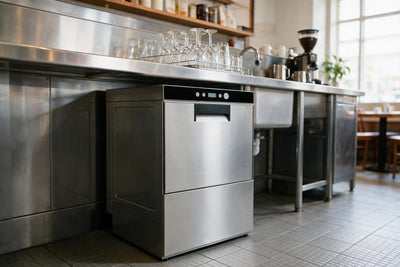
An under bench dishwasher is a compact commercial warewasher that slides neatly beneath a counter, giving cafés, bars and small kitchens fast, hygienic cleaning without surrendering bench space. Despite the small footprint, a good unit delivers powerful washing, quick cycles and commercial-grade sanitation, which makes it the natural choice when floor space is tight but standards still have to be met.
📋 What this guide covers
- What an under bench dishwasher is and where it fits
- The features that matter most when comparing models
- Realistic capacity and throughput expectations
- Installation factors, from power to plumbing and water hardness
- How it improves workflow in a small kitchen
What is an under bench dishwasher?
An under bench dishwasher is a commercial dishwashing machine sized to fit under a standard counter, which makes it ideal for small or narrow kitchens. Although it takes up little room, it provides strong washing performance, fast cycle times and the sanitation needed to meet commercial hygiene requirements. It looks similar in size to a domestic dishwasher but is built for the pace and durability a busy venue demands.
Why small kitchens benefit
For compact venues, an under bench dishwasher solves several problems at once.
Space efficiency
The machine slides under existing counters, so you keep your workspace clear and uncluttered.
Fast turnaround
With wash cycles as quick as 1 to 3 minutes, an under bench dishwasher keeps pace with peak-hour demand.
Energy and water savings
Newer models use efficient wash systems, heat recovery and optimised water distribution to reduce running costs.
Professional hygiene
Commercial-grade sanitation ensures dishes meet food safety standards, even in a tight footprint.
Key features to look for
When you compare under bench dishwashers, weigh these features against how hard the machine will work each day.
- Cycle speed: faster cycles raise turnover, so look for several cycle options for different soil levels
- Capacity and rack size: adequate rack dimensions to fit plates, utensils and glassware without limiting load volume
- Temperature control: high-temperature rinse for proper sanitation, with heat pump technology to help cut energy use
- Filtration system: a strong multi-stage filter keeps wash water clean and improves wash quality
- Noise levels: quiet operation matters when the unit sits near customers or staff
- Ease of maintenance: tool-free filters, accessible components and stainless-steel chambers reduce downtime
🔧 Pro tip, plan for glassware separately
If you push a lot of glassware, such as a busy bar, consider a dedicated glass washer alongside the dishwasher. Glasses need gentler racking and spotless rinsing, and splitting the load keeps both machines fast and your glassware clear.
Capacity and performance expectations
A commercial under bench dishwasher typically handles 20 to 40 racks per hour depending on the model. That range suits a wide spread of small operations, including:
- Small restaurants
- Hotel bar service
- Cafés
- Catering stations
- Food trucks
- Corporate pantries
With good loading practice, the machine manages plates, cutlery, cups, glassware and small utensils efficiently.
Installation considerations
Before you commit to a model, check that your site can support it.
1. Electrical requirements
Most units need either a 15A or 20A connection, though high-speed heating models may require 3-phase power. Confirm what your site can supply before ordering.
2. Plumbing and drainage
Check compatibility with your plumbing and whether your kitchen uses a gravity drain or needs a drain pump.
3. Ventilation
Some models include built-in steam condensers, while others may need additional ventilation.
4. Water softening
In hard-water areas, an integrated water softener helps protect internal components and maintain wash quality.
ℹ️ Sanitation is non-negotiable
Commercial warewashing must reliably sanitise, not just clean. Under bench units do this through high-temperature rinsing or chemical sanitation. Whichever method your machine uses, confirm it meets the food safety requirements that apply to your venue.
How an under bench dishwasher improves workflow
Placed well, the machine becomes a fixed point in an efficient cleaning loop.
- Dishes move from the dining area to the wash zone with minimal handling
- Staff unload and reload continuously through service
- Clean wares return to service quickly
- Counter space stays organised
A tighter cleaning flow lifts team productivity and supports consistent service quality. This guidance reflects commercial kitchen design principles and the practices followed by chefs, installers and foodservice consultants, with the focus on hygiene, workflow and long-term value.
Top benefits at a glance
An under bench dishwasher can transform a small commercial kitchen by providing:
- Faster washing cycles
- Consistent hygiene
- Energy savings
- Lower water consumption
- Smart use of limited space
- Reduced staff workload
- Improved service flow
Frequently Asked Questions
Most under-counter models are similar in size to a domestic dishwasher, but always check the manufacturer's measurements, especially the height, against your bench cut-out before ordering.
As a primary machine they suit small to medium venues. In a larger kitchen with multiple stations or supplemental washing needs, an under bench dishwasher works well as an excellent secondary unit.
Yes. Commercial under-counter machines use high-temperature rinses or chemical sanitation to meet food safety regulations, which is a step beyond what a domestic dishwasher delivers.
Daily cleaning is recommended to maintain optimal wash performance. Clearing the filters at the end of each service prevents debris build-up and keeps cycles running cleanly.
With proper maintenance, a quality under bench dishwasher can last 7 to 10 years or longer. Daily filter cleaning, descaling in hard-water areas and prompt servicing all extend its working life.
Choosing the right cleaning setup is easier when you compare the options side by side. Browse our under bench dishwashers or the full commercial dishwasher range. If you handle large cookware, our guide to pot and pan dishwashers covers heavy-duty cleaning, while higher-volume venues should read up on pass through dishwashers.