


Cooking Equipment
Browse commercial cooking equipment for restaurants, cafes, caterers, hotels and bakeries, from commercial ovens and combi ovens to commercial gas cooktops, commercial griddles, commercial char grills and commercial deep fryers.
Start with your menu, peak-hour volume and the services available on site: gas type and supply, power, water and exhaust ventilation. These decide which machines you can install and what you need to budget for. Compare commercial induction cooktops, commercial pizza ovens and commercial salamander grills in the sub-categories, or plan a full line with our commercial restaurant equipment page.
-
 B+S Black Char Broiler 300mm Bench Mounted LPG - CBR-3BM-LPG
$4,150.00From:$3,112.00 Rent $39.50 + GST/week
Couldn't load pickup availability
-
 B+S Black Char Broiler 1200mm Natural Gas - CBR-12-NG
$8,275.00From:$6,206.00 Rent $78.77 + GST/week
Couldn't load pickup availability
-
 B+S Black Char Broiler 1200mm LPG - CBR-12-LPG
$8,275.00From:$6,206.00 Rent $78.77 + GST/week
Couldn't load pickup availability
-
 B+S Black Char Broiler 1200mm Bench Mounted Natural Gas - CBR-12BM-NG
$7,900.00From:$5,925.00 Rent $75.20 + GST/week
Couldn't load pickup availability
-
 B+S Black Char Broiler 1200mm Bench Mounted LPG - CBR-12BM-LPG
$7,900.00From:$5,925.00 Rent $75.20 + GST/week
Couldn't load pickup availability
-
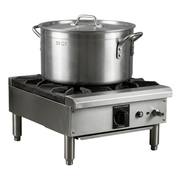
 B+S Black Benchtop Two Burner Boiling Top Cooktop Open Burner Bench Mounted Natural Gas - BT-SB2BM-NG
$4,150.00From:$3,112.00 Rent $39.50 + GST/week
Couldn't load pickup availability
-
 B+S Black Benchtop Two Burner Boiling Top Cooktop Open Burner Bench Mounted LPG - BT-SB2BM-LPG
$4,150.00From:$3,112.00 Rent $39.50 + GST/week
Couldn't load pickup availability
-
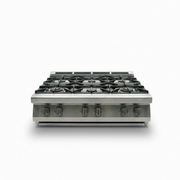
 B+S Black Benchtop Six Burner Boiling Top Cooktop Open Burner Bench Mounted Natural Gas - BT-SB6BM-NG
$6,800.00From:$5,100.00 Rent $64.73 + GST/week
Couldn't load pickup availability
-
 B+S Black Benchtop Six Burner Boiling Top Cooktop Open Burner Bench Mounted LPG - BT-SB6BM-LPG
$6,800.00From:$5,100.00 Rent $64.73 + GST/week
Couldn't load pickup availability
-
 B+S Black Benchtop Four Burner Boiling Top Cooktop Open Burner Bench Mounted Natural Gas - BT-SB4BM-NG
$5,550.00From:$4,162.00 Rent $52.83 + GST/week
Couldn't load pickup availability
-
 B+S Black Benchtop Four Burner Boiling Top Cooktop Open Burner Bench Mounted LPG - BT-SB4BM-LPG
$5,550.00From:$4,162.00 Rent $52.83 + GST/week
Couldn't load pickup availability
-
 B+S Black Benchtop Eight Burner Boiling Top Cooktop Open Burner Bench Mounted Natural Gas - BT-SB8BM-NG
$7,900.00From:$5,925.00 Rent $75.20 + GST/week
Couldn't load pickup availability
-
 B+S Black Benchtop Eight Burner Boiling Top Cooktop Open Burner Bench Mounted LPG - BT-SB8BM-LPG
$7,900.00From:$5,925.00 Rent $75.20 + GST/week
Couldn't load pickup availability
-
 Austheat 600mm Electric Freestanding Hotplate/Grill - AHT860
$8,072.00From:$6,861.20 Rent $87.08 + GST/week
Couldn't load pickup availability
-
 Austheat 600mm Freestanding Hotplate - AH860
$6,196.00From:$5,266.60 Rent $66.84 + GST/week
Couldn't load pickup availability
-
 Austheat 455mm 2L Freestanding Electric Fryer, two tanks - AF822
$8,790.00From:$7,471.50 Rent $94.82 + GST/week
Couldn't load pickup availability
-
 Austheat 43L Freestanding Electric Fryer, 3 baskets - AF813
$6,941.00From:$5,899.85 Rent $74.87 + GST/week
Couldn't load pickup availability
-
 Austheat 33L Freestanding Electric Fryer, 2 baskets - AF812
$6,343.00From:$5,391.55 Rent $68.42 + GST/week
Couldn't load pickup availability
-
 Austheat Freestanding Electric Fryer rapid recovery, 3 baskets - AF813R
$7,826.00From:$6,652.10 Rent $84.43 + GST/week
Couldn't load pickup availability
-
 Austheat Freestanding Electric Fryer rapid recovery, 2 baskets - AF812R
$6,539.00From:$5,558.15 Rent $70.54 + GST/week
Couldn't load pickup availability
-
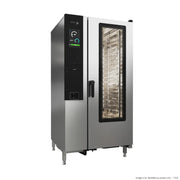
 Atosa Electric Combi Oven For Gastronomy Use: 10 X Gn 2/1 Trays EPC-1021E3
$17,300.00From:$11,245.00 Rent $142.72 + GST/week
Couldn't load pickup availability
-
 Apuro Touch Control Single Induction Hob 3kW - DF825-A
$384.90From:$361.00 Rent $4.58 + GST/week
Couldn't load pickup availability
-
 Apuro Large Induction Food Warmer - CU486-A
$351.90From:$239.00 Rent $3.03 + GST/week
Couldn't load pickup availability
-
 Apuro Induction Food Warmer - CU485-A
$313.40From:$212.00 Rent $2.69 + GST/week
Couldn't load pickup availability


WE’RE HERE TO ANSWER
Cooking Equipment FAQs
Should I choose gas or electric commercial cooking equipment?
Choose gas if you want instant, visible heat control and have a suitable gas supply. Choose electric or induction if gas isn't available, or you want simpler installation and less radiant heat. Check running costs for your tariff and gas type before you decide.
Do commercial cooking appliances need an exhaust canopy?
Most do. Appliances that produce grease, smoke, steam or combustion gases, such as fryers, char grills and ranges, and some ovens, generally need mechanical ventilation designed to AS 1668.2 and the building code. Confirm the exact requirement with your ventilation designer and local council before you buy.
What is the difference between natural gas and LPG commercial appliances?
Natural gas (NG) comes from the mains and LPG is bottled or tank supplied, and appliances use different injectors and pressures for each. Buy the correct gas type for your site; a licensed gas fitter can convert some models with the right kit.
Do commercial ovens and fryers need three-phase power?
Larger electric ovens, fryers and combi ovens often do, while compact benchtop models can run from a single-phase outlet. Check each model's data plate for voltage and amperage, and have a licensed electrician confirm your board and circuits.
How many GN trays does a commercial combi oven hold?
Combi ovens are sized by Gastronorm (GN) tray count, with 6, 10 and 20 tray models of 1/1 GN size common. Check each model's tray capacity and spacing against the pans you use, and see the combi ovens category to compare sizes.