


Rotisseries & Kebab
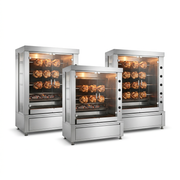
Kebab & Chicken Rotisseries are essential in high-volume kitchens, takeaway shops, and charcoal grill restaurants aiming to serve juicy, evenly roasted meats with authentic flavor. Whether you're preparing charcoal-grilled shawarma, peri-peri chicken, or Mediterranean-style kebabs, investing in a quality rotisserie system dramatically improves cooking consistency, kitchen efficiency, and product output.
-
 Yasaki Heavy Duty Stainless Steel Electric Kebab Knife KS80AS
$799.00From:$679.15 Rent $8.62 + GST/week
Couldn't load pickup availability
-
 GasMax Semi-automatic 5 Burner NG Kebab Machine KB-5
$2,490.00From:$1,693.20 Rent $21.49 + GST/week
Couldn't load pickup availability
-
 GasMax Semi-automatic 4 Burner NG Kebab Machine KB-4
$2,190.00From:$1,489.20 Rent $18.90 + GST/week
Couldn't load pickup availability
-
 GasMax Semi-automatic 4 Burner LPG Kebab Machine – KB-4LPG
$2,190.00From:$1,489.20 Rent $18.90 + GST/week
Couldn't load pickup availability
-
 GasMax Semi-automatic 3 Burner NG Kebab Machine KB-3
$1,890.00From:$1,285.20 Rent $16.31 + GST/week
Couldn't load pickup availability
-
 GasMax Semi-automatic 3 Burner LPG Kebab Machine – KB-3LPG
$1,890.00From:$1,285.20 Rent $16.31 + GST/week
Couldn't load pickup availability
-
 ElectMax Electric Kebab Machine EKB-2
$1,890.00From:$1,285.20 Rent $16.31 + GST/week
Couldn't load pickup availability
-
 ElectMAX Cordless Electric Kebab Knife CKS100
$709.00From:$602.65 Rent $7.64 + GST/week
Couldn't load pickup availability
-
 ConvectMAX Compact Basket Rotisserie YXD-266E
$2,190.00From:$1,861.50 Rent $23.62 + GST/week
Couldn't load pickup availability
-
 BLAST WASH Underbench Glasswasher – AT40U
$5,300.00From:$2,500.00 Rent $31.73 + GST/week
Couldn't load pickup availability
-
 BLAST WASH Underbench Dishwasher - AT50U
$9,800.00From:$3,630.00 Rent $46.07 + GST/week
Couldn't load pickup availability
-
 BLAST WASH Pass Through Dishwasher - AT50H
$11,900.00From:$5,800.00 Rent $73.62 + GST/week
Couldn't load pickup availability
-
 Anvil 8 Bird Chicken Rotisserie
$2,000.00From:$1,610.00 Rent $20.43 + GST/week
Couldn't load pickup availability
-
 ACAIPRO Commercial Acai Machine B22 – Acai Bowl Maker
$15,300.00From:$15,300.00 Rent $194.19 + GST/week
Couldn't load pickup availability


WE’RE HERE TO ANSWER
Rotisseries & Kebab FAQs
What’s the difference between Gas and Electric Kebab & Chicken Rotisseries?
Gas models (LPG or Natural) heat faster and are suited for high-volume kitchens with high BTU output, ideal for traditional-style grilling. Electric models are easier to install, require no gas plumbing, and offer more precise temperature control—great for indoor or compact kitchen setups with limited ventilation options.
Do I need a Type 1 hood for installing a commercial chicken rotisserie?
Yes, most commercial-grade gas rotisseries require a Type 1 exhaust hood due to grease-laden vapors and open flame. Electric rotisseries may not require one, but local council regulations and site-specific risk assessments should dictate the final requirement.
How do I clean and maintain a kebab rotisserie to prevent downtime?
Daily cleanings involve removing and washing the drip trays, skewers, and burner shields. Weekly, inspect burner ports for blockages and degrease internal surfaces with food-safe cleaner. Schedule monthly checks for motor wear, gas leaks, and thermostat calibration to optimize efficiency and avoid fire risks.
How much meat can a commercial vertical chicken rotisserie hold?
Capacities vary by model; a 5-spit vertical rotisserie can hold approximately 20–25 chickens (1.2kg each) or 35kg of mixed meat product. Horizontal rotisseries may use basket cages or trays, ideal for rolled pork belly or whole turkeys.
Why use a chicken rotisserie instead of a standard convection oven?
Rotisseries deliver better heat distribution through continuous rotation, rendering fat evenly and producing crispier skin and juicier meat. Visible cooking also enhances customer engagement, improving food presentation and increasing sales volumes in QSR or takeaway formats.