


Steamers & Pasta
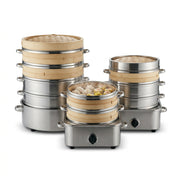
Commercial Food Steamers are an essential for any high-output kitchen, offering fast, consistent cooking that preserves nutrients and texture. Whether you run a school cafeteria, hospital, or upscale restaurant, investing in a high-quality food steamer improves efficiency and meal consistency.
We supply a wide range of electric and gas food steamers, including boiler-based and boilerless options, suitable for any foodservice operation.
-
 Waldorf Bold PCLB8140G - 450mm Gas Pasta Cooker
$11,061.00From:$8,185.14 Rent $103.89 + GST/week
Couldn't load pickup availability
-
 Waldorf Bold PCLB8140E7 - 450mm Electric Pasta Cooker
$12,667.00From:$9,373.58 Rent $118.96 + GST/week
Couldn't load pickup availability
-
 Waldorf Bold PCLB8140E - 450mm Electric Pasta Cooker
$11,145.00From:$8,247.30 Rent $104.67 + GST/week
Couldn't load pickup availability
-
 Waldorf Bold PCB8140G - 450mm Gas Pasta Cooker
$11,061.00From:$8,185.14 Rent $103.89 + GST/week
Couldn't load pickup availability
-
 Waldorf Bold PCB8140E7 - 450mm Electric Pasta Cooker
$12,667.00From:$9,373.58 Rent $118.96 + GST/week
Couldn't load pickup availability
-
 Waldorf Bold PCB8140E - 450mm Electric Pasta Cooker
$11,145.00From:$8,247.30 Rent $104.67 + GST/week
Couldn't load pickup availability
-
 Waldorf 800 Series PCL8140G - 450mm Gas Pasta Cooker
$10,074.00From:$7,454.76 Rent $94.61 + GST/week
Couldn't load pickup availability
-
 Waldorf 800 Series PCL8140E7 - 450mm Electric Pasta Cooker
$11,686.00From:$8,647.64 Rent $109.75 + GST/week
Couldn't load pickup availability
-
 Waldorf 800 Series PCL8140E - 450mm Electric Pasta Cooker
$10,160.00From:$7,518.40 Rent $95.42 + GST/week
Couldn't load pickup availability
-
 Waldorf 800 Series PC8140G - 450mm Gas Pasta Cooker
$10,074.00From:$7,454.76 Rent $94.61 + GST/week
Couldn't load pickup availability
-
 Waldorf 800 Series PC8140E7 - 450mm Electric Pasta Cooker
$11,686.00From:$8,647.64 Rent $109.75 + GST/week
Couldn't load pickup availability
-
 Waldorf 800 Series PC8140E - 450mm Electric Pasta Cooker
$10,160.00From:$7,518.40 Rent $95.42 + GST/week
Couldn't load pickup availability
-
 Roband Pasta Master / Vegetable Blancher
$1,333.00From:$1,133.05 Rent $14.38 + GST/week
Couldn't load pickup availability
-
 K+ Six Baskets Pasta Cookers Free Standing Natural Gas
$5,835.00From:$4,376.00 Rent $55.54 + GST/week
Couldn't load pickup availability
-
 K+ Six Baskets Pasta Cookers Free Standing LPG
$5,835.00From:$4,376.00 Rent $55.54 + GST/week
Couldn't load pickup availability
-
 K+ Six Baskets Noodle Cookers Free Standing Natural Gas
$5,835.00From:$4,376.00 Rent $55.54 + GST/week
Couldn't load pickup availability
-
 K+ Six Baskets Noodle Cookers Free Standing LPG
$5,835.00From:$4,376.00 Rent $55.54 + GST/week
Couldn't load pickup availability
-
 GasMax V Pan Natural Gas 9 Baskets Pasta And Noodle Cooker PC150-9
$4,990.00From:$3,393.20 Rent $43.06 + GST/week
Couldn't load pickup availability
-
 GasMax V Pan Natural Gas 6 Baskets Pasta And Noodle Cooker PC150-6
$3,890.00From:$2,645.20 Rent $33.57 + GST/week
Couldn't load pickup availability
-
 GasMax Gasmax V Pan Lpg 9 Baskets Pasta And Noodle Cooker PC150-9LPG
$4,990.00From:$3,393.20 Rent $43.06 + GST/week
Couldn't load pickup availability
-
GasMax Gasmax V Pan Lpg 6 Baskets Pasta And Noodle Cooker PC150-6LPG
$3,890.00From:$2,645.20 Rent $33.57 + GST/week
Couldn't load pickup availability
-
 FryMax V Pan Natural Gas Deep Fryer VP122
$3,290.00From:$2,237.20 Rent $28.39 + GST/week
Couldn't load pickup availability
-
 FryMax V Pan Lpg Deep Fryer VP122LPG
$3,290.00From:$2,237.20 Rent $28.39 + GST/week
Couldn't load pickup availability
-
 Fagor Kore 900 Series Pasta Cooker CP-G905
$8,690.00From:$6,517.50 Rent $82.72 + GST/week
Couldn't load pickup availability


WE’RE HERE TO ANSWER
Steamers & Pasta FAQs
What’s the difference between boiler and boilerless food steamers?
Boiler steamers use a central steam generator, perfect for high-volume operations but require more maintenance due to scale buildup. Boilerless steamers generate steam inside the cooking cavity using water jets and a heated plate, making them easier to clean and maintain—ideal for medium-sized restaurants and lower-volume locations.
Do food steamers need a dedicated water connection and drainage?
Yes, most commercial food steamers require a plumbed water inlet and a drain. Boiler-based models often demand both cold and filtered water, whereas boilerless types may use onboard storage but still need drainage. For compliance, check if your local council mandates backflow prevention or grease traps.
How do you clean and maintain a commercial food steamer?
Daily cleaning includes draining residual water, wiping the interior with non-abrasive cleaners, and descaling water lines weekly using food-safe descaler. Boiler models require periodic boiler flushes and may need professional servicing to remove carbon and limescale buildup, especially in hard-water regions.
How many gastronorm (GN) pans fit into a commercial food steamer?
Standard food steamers hold 1 to 6 GN 1/1 pans per cavity, depending on the model. High-capacity double-cavity units can handle up to 10 full-size pans, making them ideal for schools, aged care, or catering facilities serving high volumes.
Why use a food steamer instead of a convection oven?
Food steamers cook faster, preserve more nutrients, and maintain moisture without the need for added fats or oils. They are particularly beneficial for seafood, vegetables, and batch-cooking proteins in institutions where quality and consistency are key. Steamers also allow for lower energy use per meal compared to convection ovens over time.